
Top 10 WikiHomeImprovements Mistakes to Avoid
The most expensive renovation errors rarely announce themselves in a showroom. They appear when a new faucet misses the basin, a shower has inadequate flow, or a finished wet area leaks into the room below. Here are ten precise checks to make before buying, installing, and accepting bathroom and plumbing upgrades.
Practical guidance for homeowners, architects, plumbing contractors, hospitality operators and facility teams.
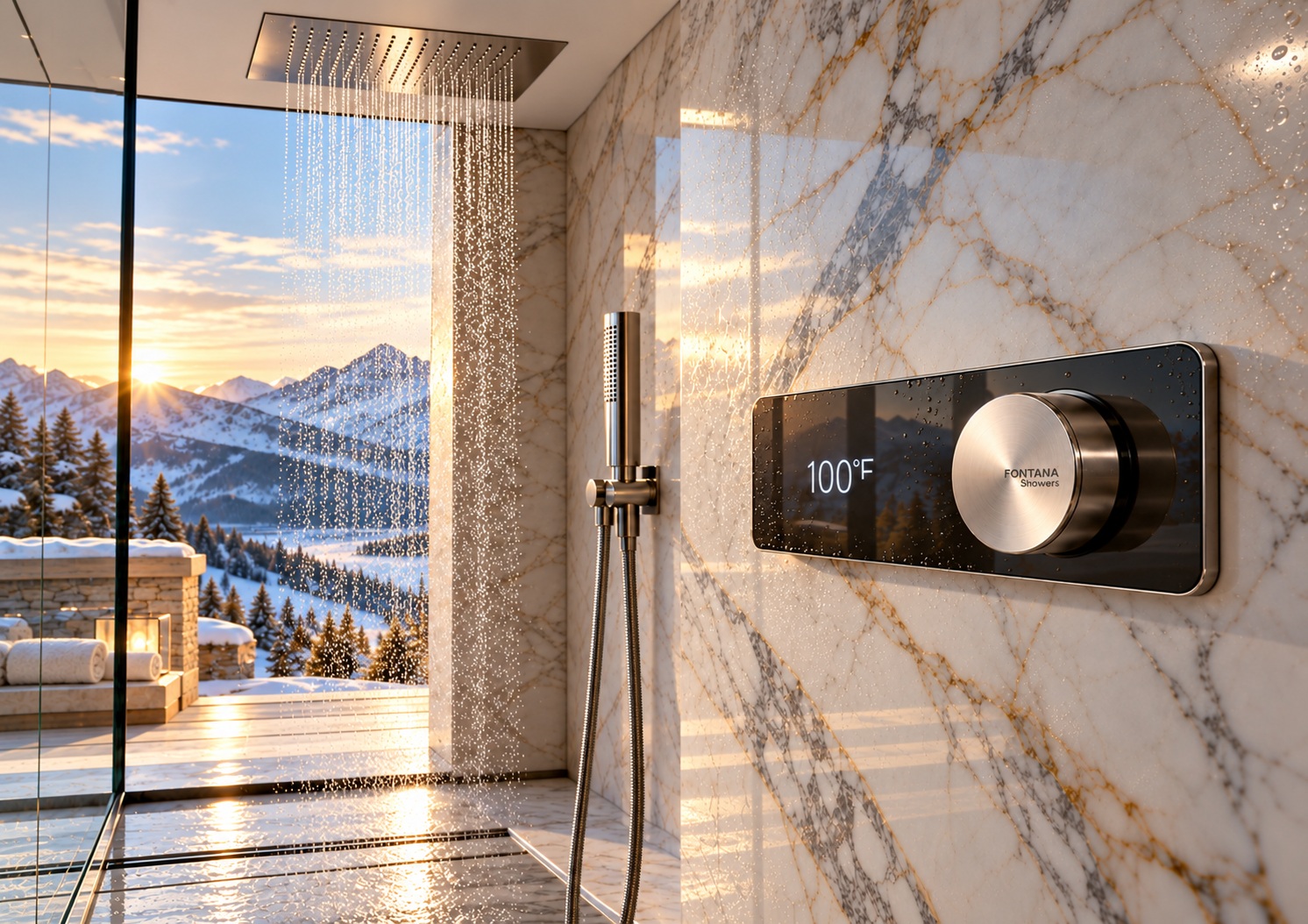
The difference between an attractive upgrade and a reliable one
Home improvement is not simply the process of choosing new finishes. Faucets, tile, showers and sensor fixtures depend on plumbing capacity, waterproofing, spatial clearances and accessible service components. A product can perform well in a showroom and fail in the field when the installation conditions differ from its design assumptions.
For a modest bathroom refresh, the largest risks are commonly concealed connections and mismatched dimensions. For hotels, stadiums, shopping centers and shared-use facilities, the same oversight is multiplied across hundreds of fixtures, increasing disruption and repair expense.
Read more about project planning
Before purchasing, create a fixture schedule identifying the product, space, supply connection, drain requirement, mounting surface, approximate installation sequence and responsible trade. Mark every item needing manufacturer confirmation. Treat field verification, inspection and operational testing as real project activities rather than optional last steps.
Starting demolition before the scope is settled
When an upgrade begins with a finish selection instead of a measured scope, ordinary discoveries become expensive changes. Relocating a vanity can affect the supply and drain rough-ins, mirror alignment, lighting, wall finishes, and sometimes electrical work. The practical question is not just “What do we want to install?” but “Which existing conditions must change to install it correctly?”
What to do instead
Draw a simple existing-versus-proposed plan. Record wall-to-wall dimensions, door swings, fixture centerlines, ceiling heights, electrical outlets, and shutoff locations. Divide the project into work that is required, optional, and dependent on what demolition reveals. Obtain separate allowances for concealed repairs rather than burying them inside the finish budget.
How a well-defined scope prevents change orders
Use a decision gate before ordering
Approve the final layout only after confirming that doors clear fixtures, storage can open, and the new sink or shower fits the available space. Make a single schedule of purchased items, rough-in dimensions, lead times, finish selections, and the person responsible for each decision.
Where hospitality projects differ
A hotel renovation must also specify how many rooms can be taken out of service at once, when noisy demolition is permitted, and which guest circulation routes remain usable. Those operating constraints should affect the construction sequence before contractors price the job.
Useful deliverable: one dimensioned scope drawing and an itemized change-order approval process.
Assuming existing pipes and drains will suit new fixtures
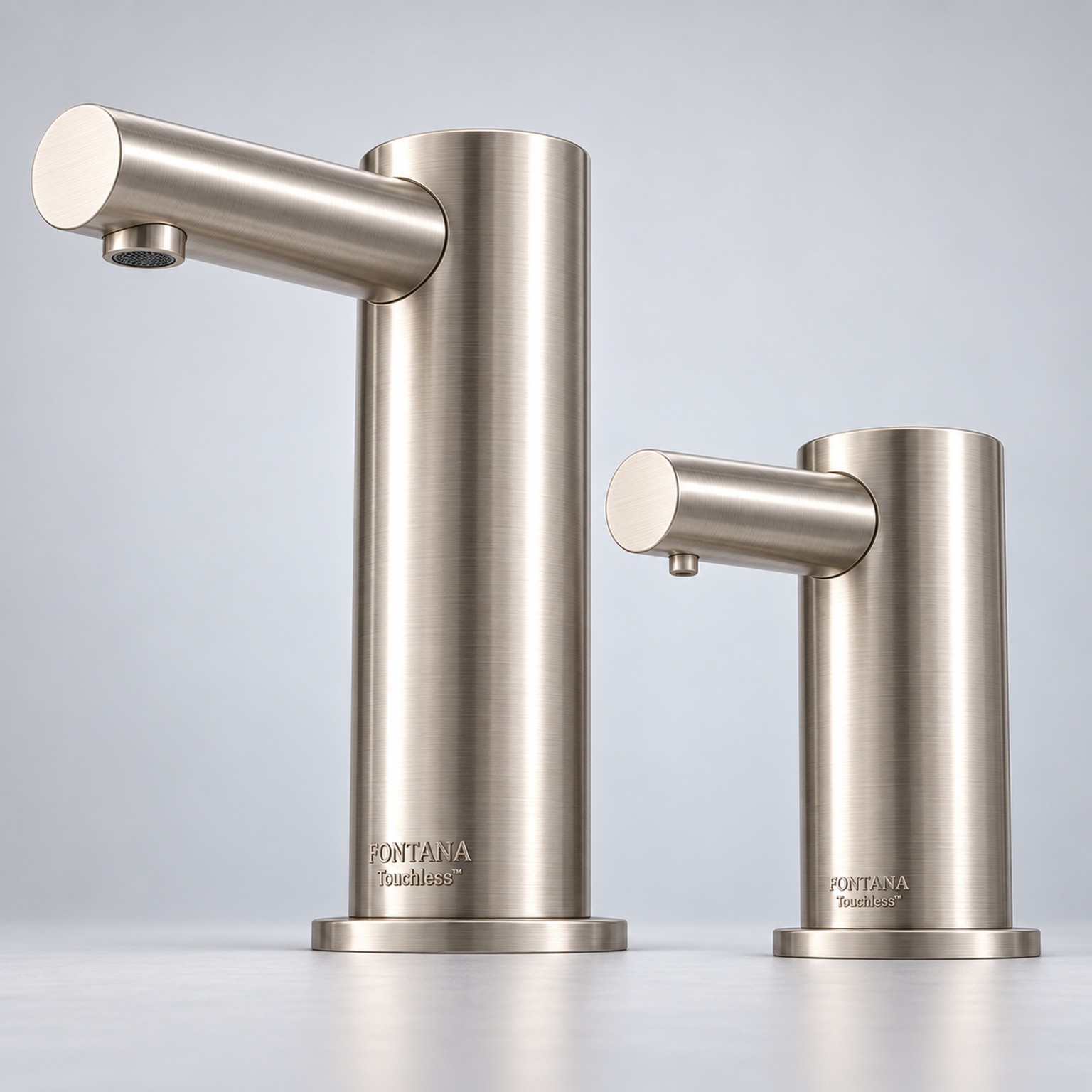
A replacement faucet may fit a countertop while its hoses, supply valves, or drain assembly do not suit the existing installation. A new shower may expose pressure fluctuations that an old low-demand fixture never made obvious. Cosmetic work cannot solve blocked traps, corroded shutoffs, or inadequate hot-water delivery.
What to do instead
Turn on existing fixtures and observe flow, temperature stability, drainage speed, and visible leaks before demolition. Identify pipe materials, shutoff condition, supply connection size, drain arrangement, and available access. Where pressure or hot-water capacity is uncertain, have the system evaluated under realistic demand rather than judging it from a static reading alone.
What a plumbing-condition survey should include
Separate pressure from flow
Static pressure is measured when water is not flowing; dynamic behavior under use also depends on pipe friction, fixture restrictions, and simultaneous demand. A large showerhead arrangement can perform poorly even where the static reading looks acceptable.
Do not conceal a questionable connection
Resolve deteriorated stops, inaccessible joints, and improperly supported piping before walls or vanity panels are closed. Photograph the piping route while it remains exposed so the owner can locate service points later.
Useful deliverable: a pre-work plumbing survey with identified repairs, not merely a list of purchased fixtures.

Buying on style without checking fit and serviceability
Two faucets with similar photographs may need different mounting holes, deck thicknesses, inlet connections, or clearances. A wall-mounted faucet may put its water stream at the wrong place in the basin; an attractive special finish may require cleaning methods the maintenance team cannot reasonably provide.
What to do instead
Compare the exact model drawing against the sink or vanity. Check hole spacing, mounting depth, spout reach and height, expected stream landing position, pressure range, flow classification, and access to the cartridge or electronic components. Verify replacement parts by model number before ordering multiple units.
How to test fixture compatibility on paper
Check the water trajectory
On a vessel sink, a high spout can produce splash if the stream meets a shallow bowl near its edge. Plot the spout outlet relative to the basin center and drain using the published dimensions; do not assume a catalog photograph represents your sink geometry.
Check service access, not just installation space
A replacement cartridge that requires removing a wall panel changes lifetime cost. In office or mall restrooms, prefer coordinated models where technicians can reach shutoffs and service parts without dismantling the finished surface.
Useful deliverable: an approved model-by-model compatibility checklist.
Treating tile and grout as waterproofing
Tile surfaces can look flawless while moisture travels through joints, corners, and penetrations into the wall assembly. Leakage tends to concentrate at shower curbs, drains, niches, mixing-valve openings, and changes in substrate. A shower needs an engineered waterproofing assembly, not a promise that the grout will be sealed.
What to do instead
Choose a compatible membrane or other approved waterproofing system and follow its full installation instructions. Detail the drain connection, wall-floor transition, corners, curbs, benches, niches, and pipe penetrations. Verify slopes and required tests before tile conceals the work.
The critical wet-area inspection points
Inspect the assembly before covering it
Confirm that membrane overlaps, seams, transitions, and sealants match the selected system. Mixing products from different systems can create untested joints. Where the assembly or local authority requires a flood test, carry it out and resolve any failure before the finishes proceed.
Consider adjacent rooms
In hotels, a shower leak can damage the adjoining guest room or ceiling below. Review thresholds, shower-door spray patterns, and the placement of vulnerable wall finishes as part of moisture containment.
Useful deliverable: an approved waterproofing detail and documented inspection before tiling.
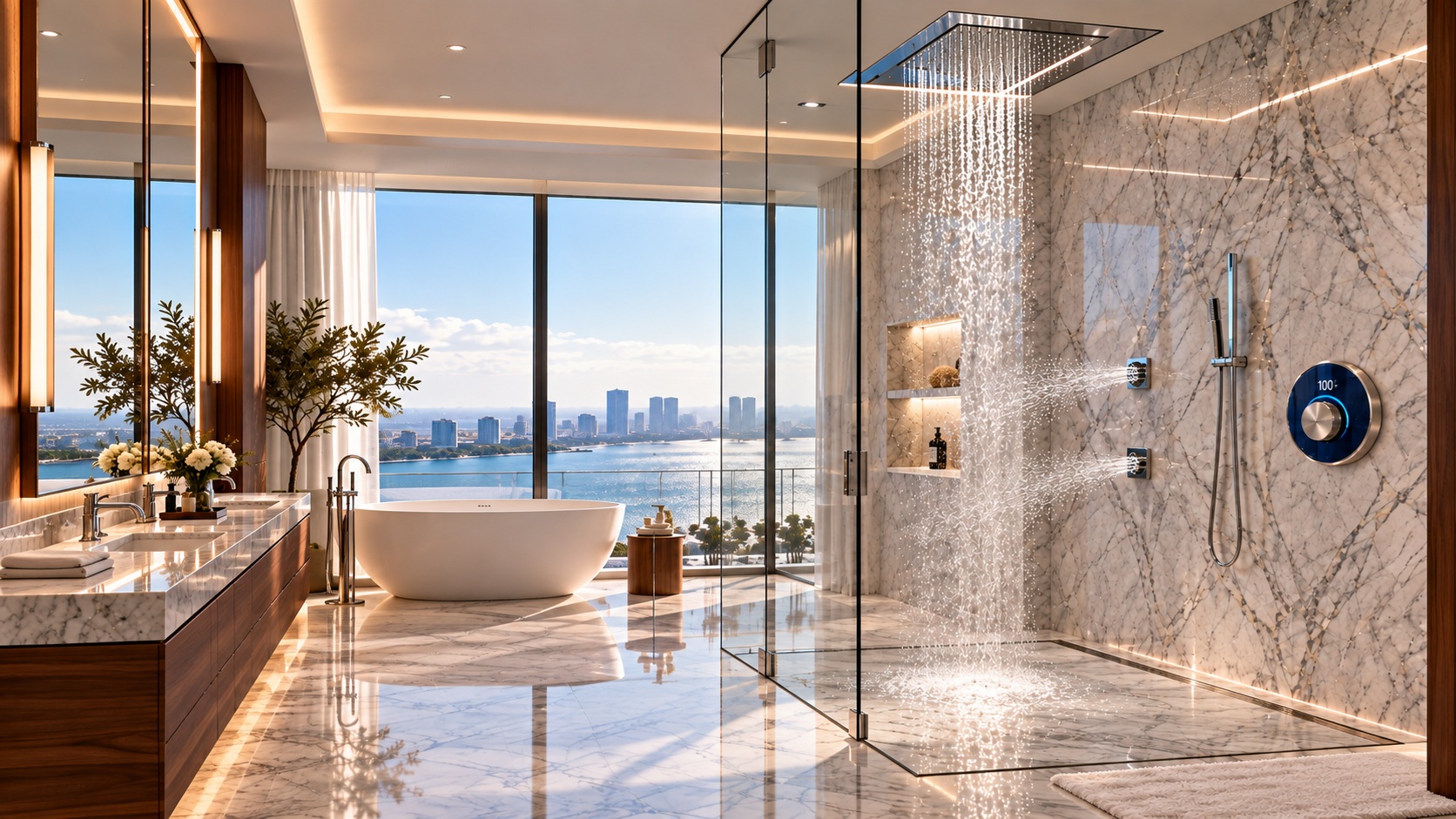
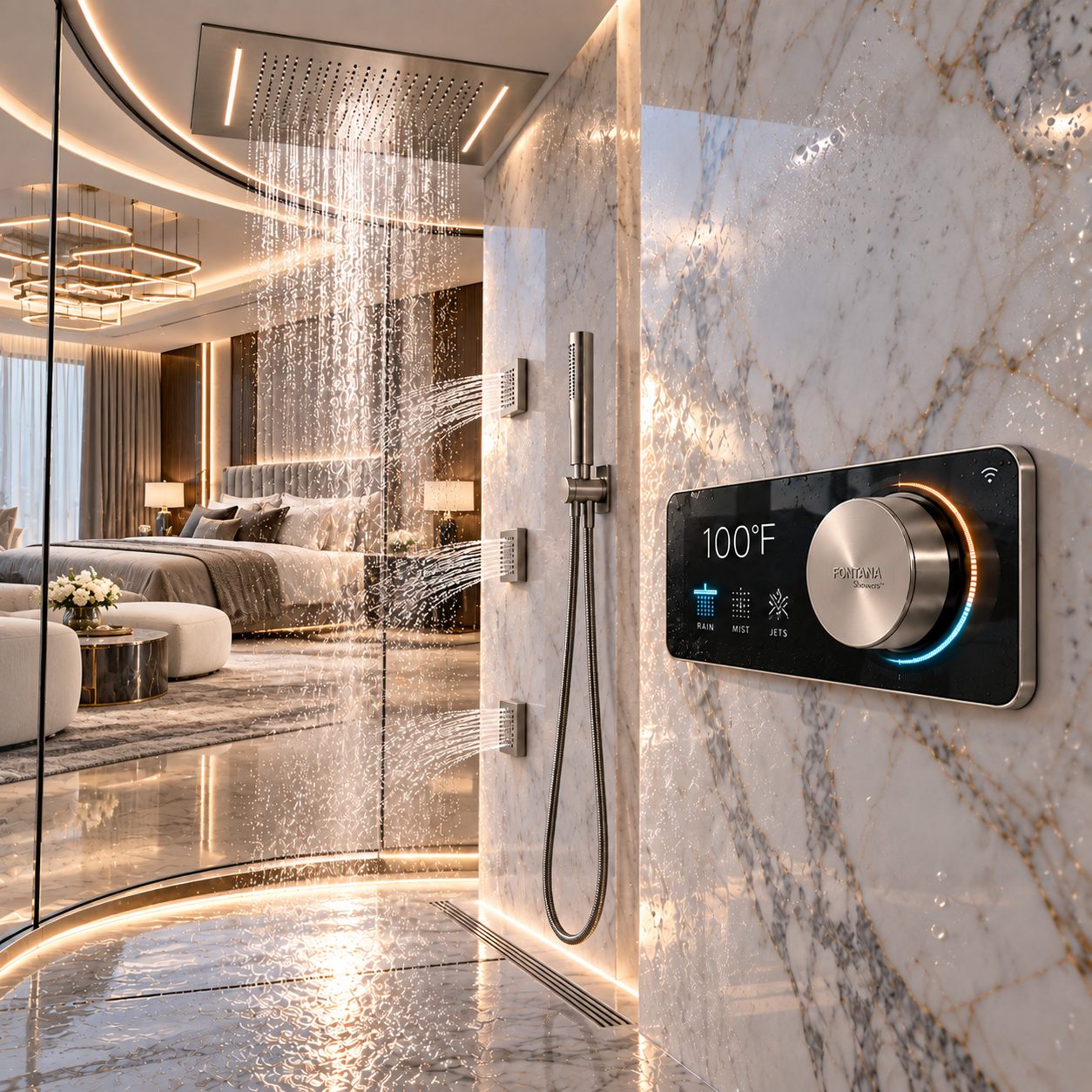
Combining shower outlets without a hydraulic plan
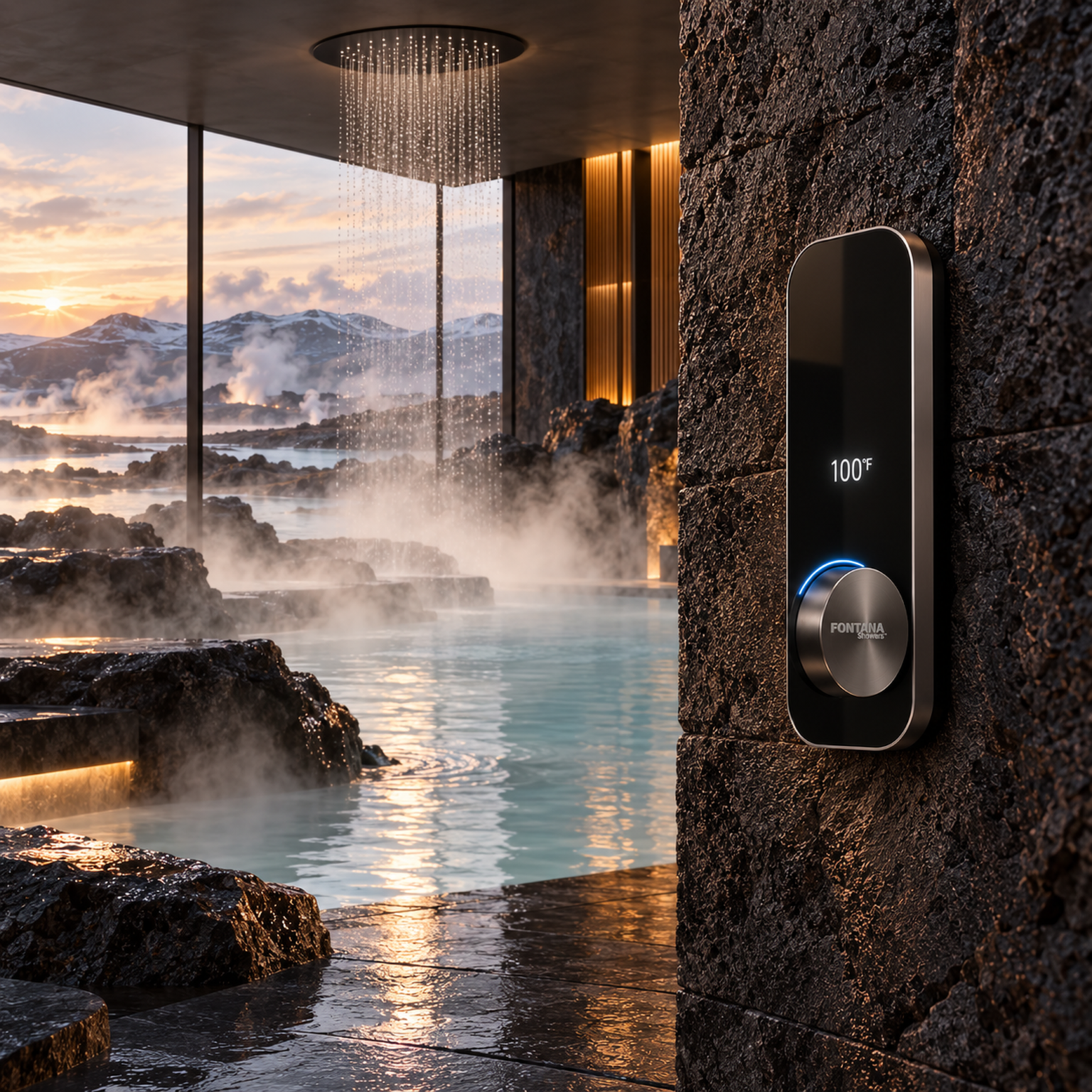
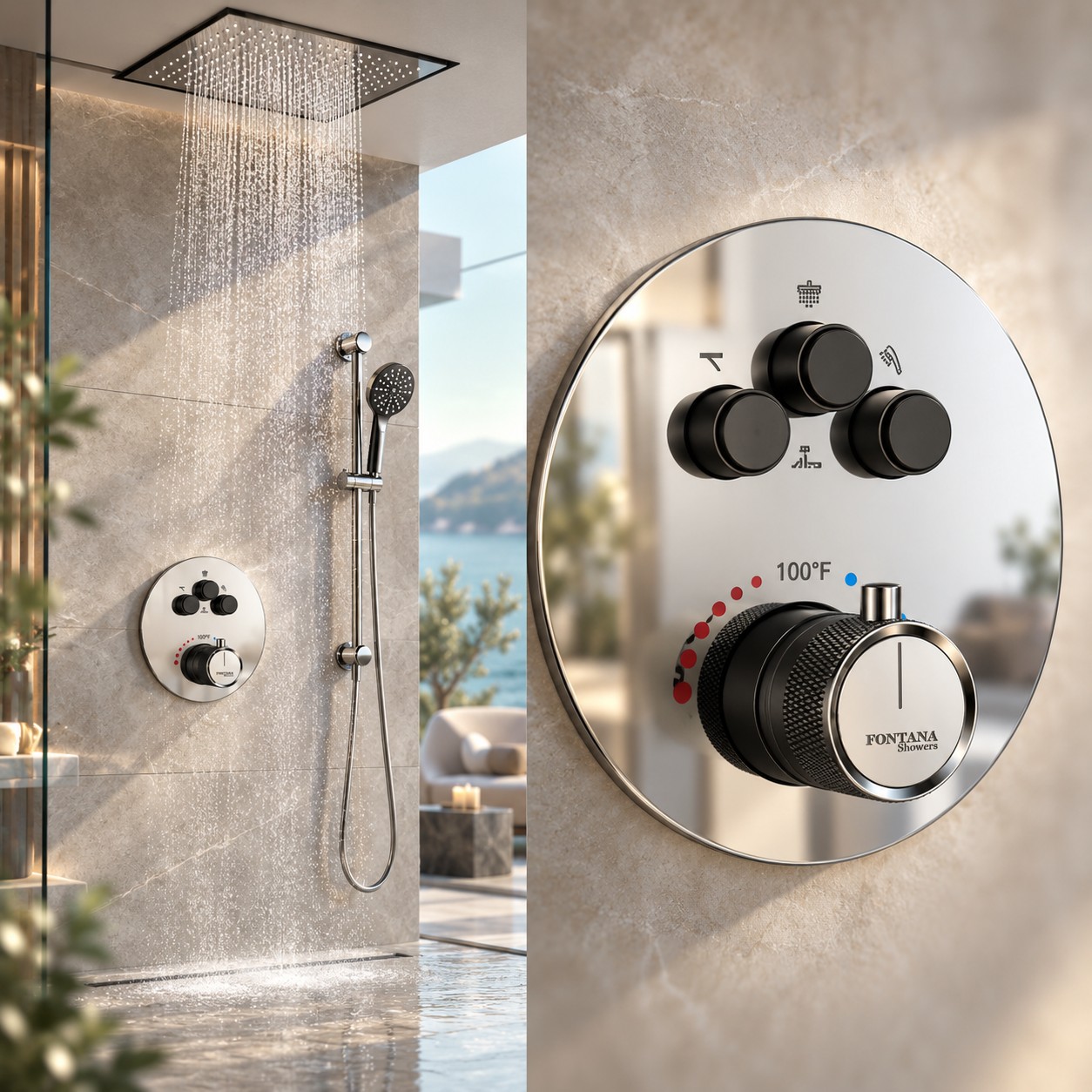
A shower with a rain head, handheld spray, and body jets needs more coordination than a single-outlet shower. A diverter does not automatically mean all outlets can run together, and a thermostatic valve cannot compensate for inadequate supply capacity. Wrong rough-in depth may also leave decorative trim unable to seat against the finished wall.
What to do instead
Confirm which outlets the diverter can operate simultaneously, each outlet’s rated demand, the mixing valve capacity, hot-water supply, pipe arrangement, and pressure losses. Check the required rough-in depth against the combined thickness of waterproofing, backer, adhesive, and tile.
How to coordinate a multi-outlet shower
Make an outlet-operation matrix
List every possible diverter setting and mark the outlets active in that setting. Calculate demand for the most demanding permitted combination, then check the valve and supply against manufacturer data. Do not sum outlets that can never operate together, and do not assume independent outlet ratings guarantee simultaneous performance.
Test usability before handover
Verify stable mixed temperature, sensible control direction, consistent outlet switching, acceptable spray location, and a handheld hose that does not strike the floor or adjacent fixture.
Useful deliverable: one rough-in diagram and outlet-operation matrix.

Confusing a low flow number with good water performance
A smaller gallons-per-minute value can reduce water use, but it is not the only purchasing criterion. A poor spray pattern may cause longer use; a reduced-flow faucet may be inappropriate for certain public-lavatory applications; and a fixture advertised as efficient is not necessarily certified for its intended category.
What to do instead
Identify the fixture class first: private bathroom sink, public lavatory, kitchen, or shower. Compare product specifications with applicable plumbing requirements and, where relevant, independently certified EPA WaterSense listings. Evaluate how the device performs at expected pressure and consider both water and hot-water energy use.
How to evaluate water savings responsibly
Compare like with like
EPA WaterSense specifications are category-specific. Do not use the private-lavatory faucet criteria as proof that a public restroom installation meets its separate requirements. For showerheads, consider the spray force and coverage information supplied for the certified product rather than flow alone.
Estimate annual impact
For a building with known usage, estimate consumption from flow rate, average activation duration, number of uses, and operating days. Then compare that estimate with measured bills or fixture-meter data. Clearly label such calculations as projections until post-installation readings confirm the result.
Useful deliverable: a fixture-class-specific performance comparison, with assumptions stated.
Installing touchless fixtures without checking power or detection
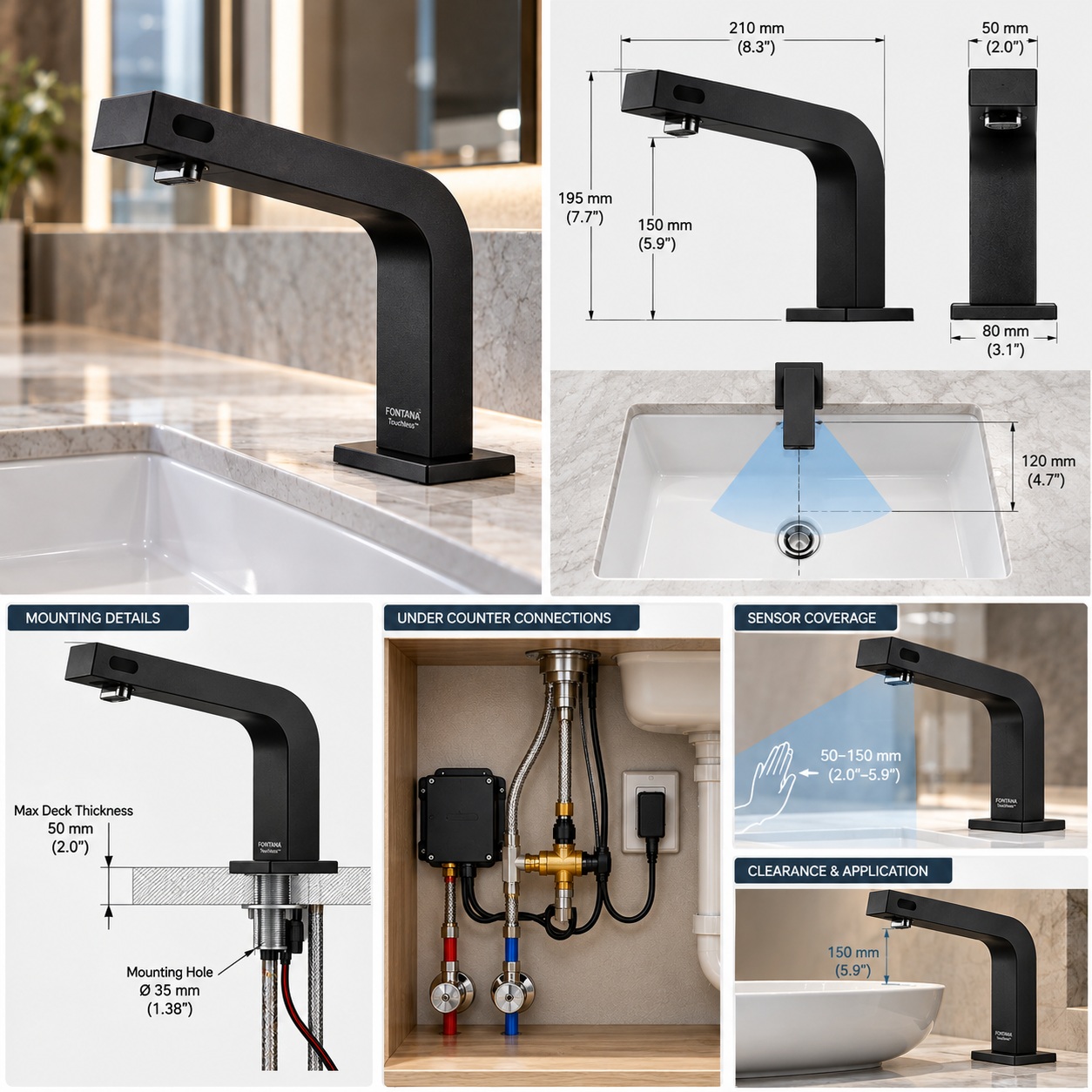
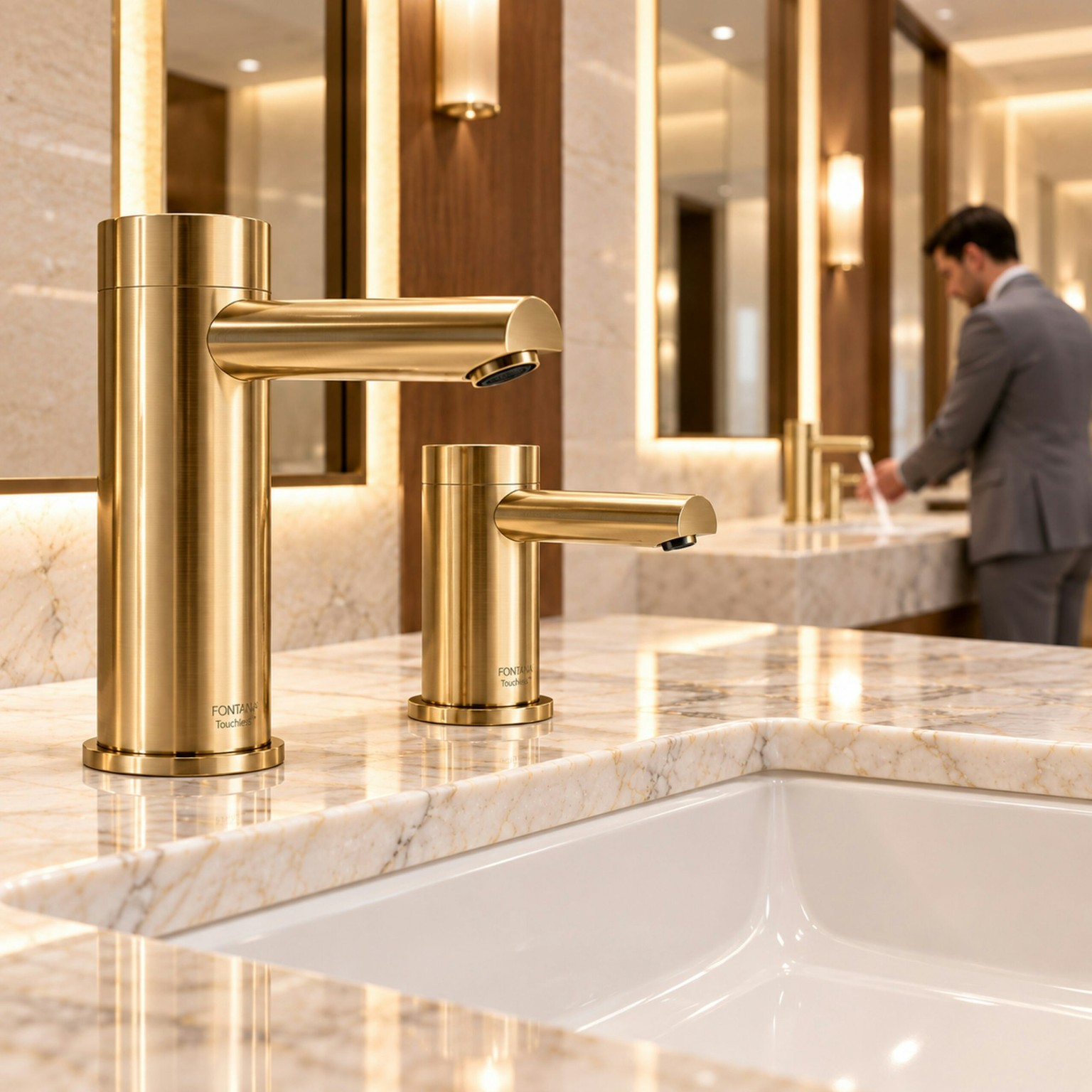
An automatic faucet includes more than a visible spout. Its control electronics, power supply, sensor field, solenoid valve, filters, and mixing arrangements all affect reliable operation. An incompatible reflective basin or poorly positioned sensor can cause repeated activations or failures to detect hands.
What to do instead
Check the manufacturer’s wiring or battery specification, sensor range, minimum clearances, basin compatibility, mixing arrangement, accessible stop valves, and filter and solenoid service positions. Confirm that moisture-prone electrical locations and power connections are handled as specified by the manufacturer and applicable rules.
The commissioning test that catches sensor faults
Test real hand positions
Approach from several normal washing positions and confirm that water starts promptly and stops after hands are removed. Place reflective items near the basin and watch for unwanted cycling. Check the basin for splash at normal activation distance and verify operation after power interruption where the model supports it.
Plan frequent-use maintenance
In stadiums and malls, identify who replaces batteries, clears filters, and responds to fault signals. A maintenance team should know where the solenoid and isolation stops are located without dismantling a vanity.
Useful deliverable: sensor commissioning results and a service-location diagram.

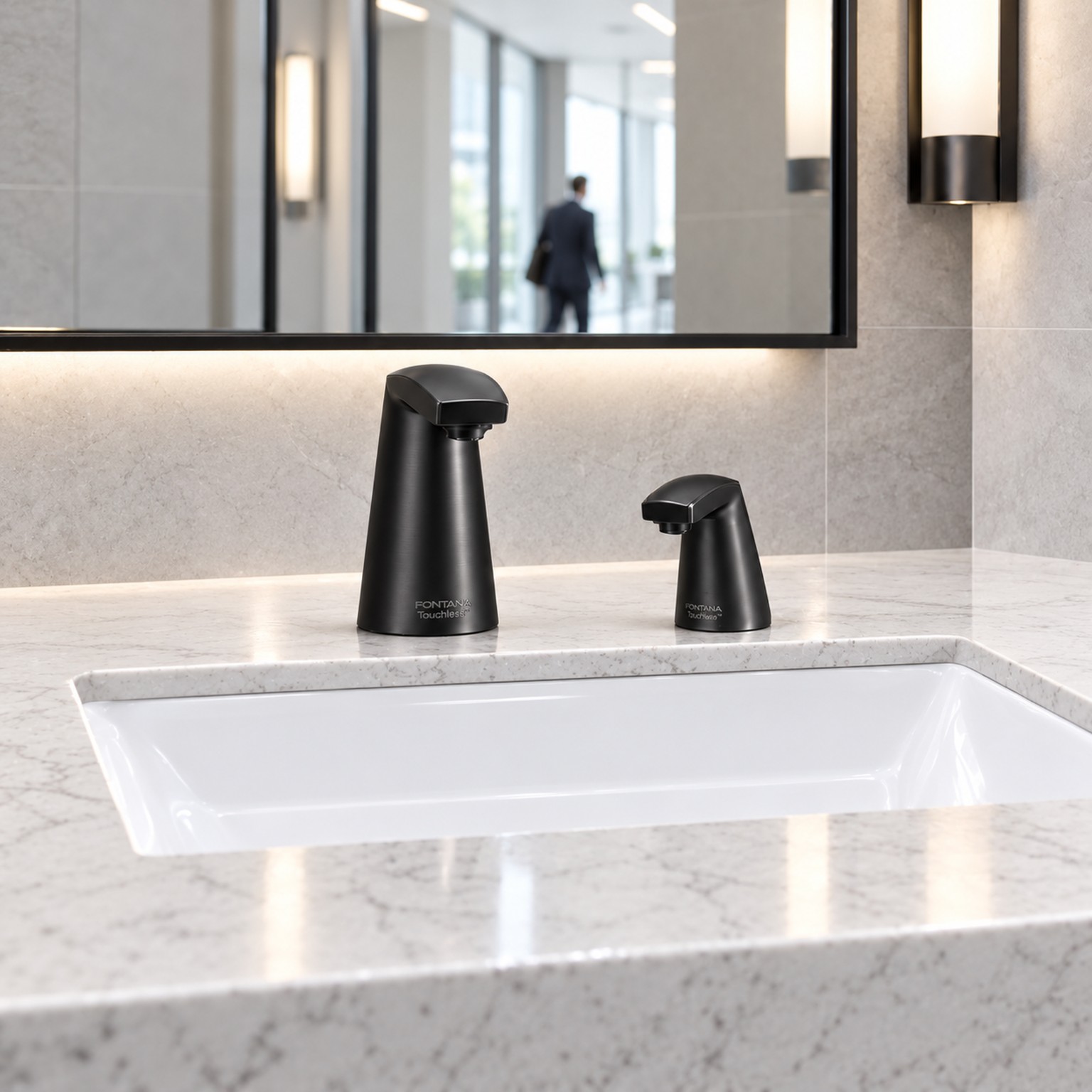
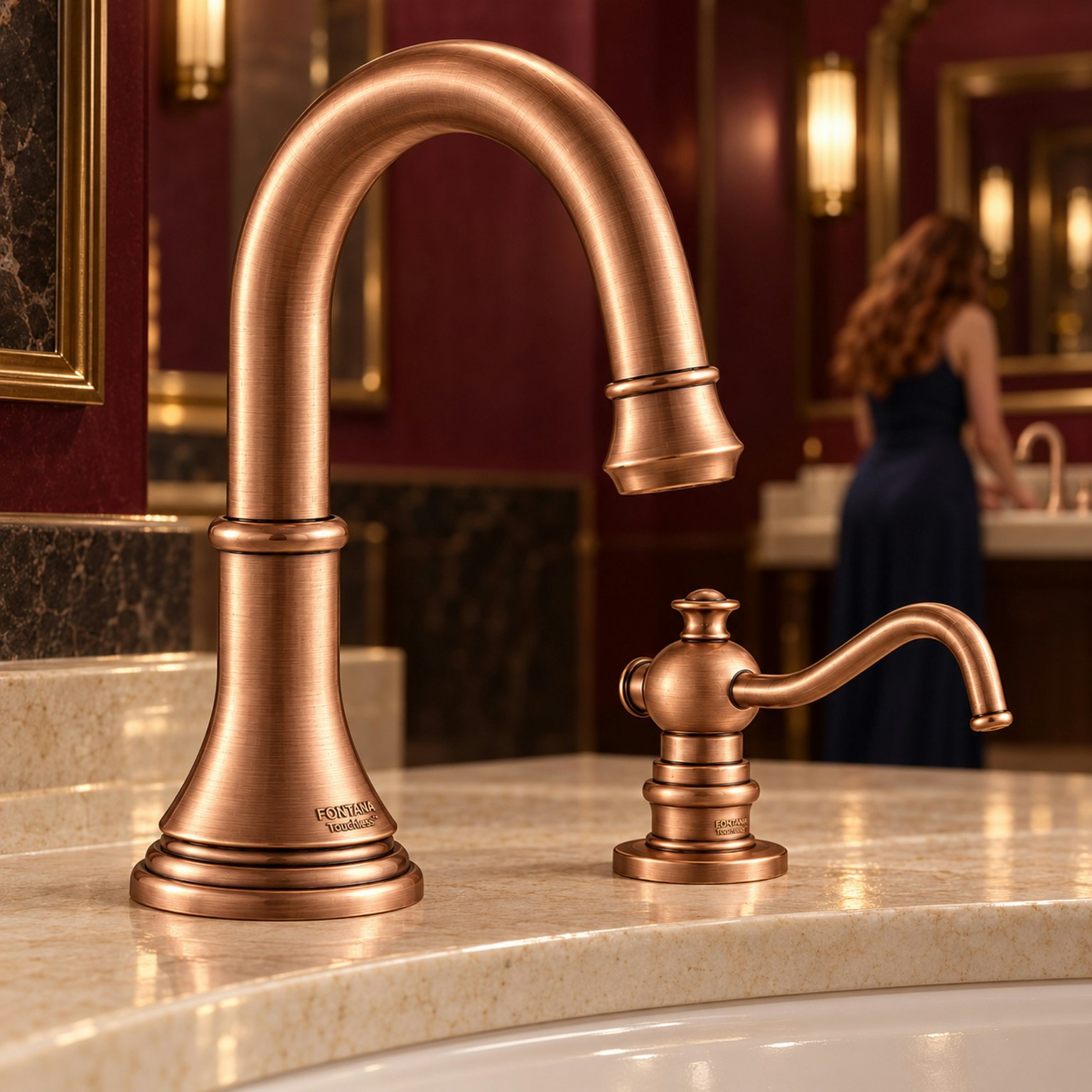
Assuming an accessible product makes an accessible room
A touchless faucet may be easy to operate while the sink below it blocks knee space, the countertop is too high, or a dispenser sits beyond a usable reach range. Accessibility is evaluated as an installed arrangement, not as a label on one product carton.
What to do instead
Review the complete layout under the applicable accessibility provisions: approach route, clear floor space, knee and toe clearances, lavatory height, operable parts, accessories, and any protective treatment required for exposed pipes. Confirm dimensions on the finished installation, not only the design drawing.
Accessibility checks for public restrooms
Use the applicable standard precisely
For covered U.S. facilities, the 2010 ADA Standards contain relevant requirements including Sections 306, 308, 309, and 606. The project may also be subject to state or local provisions. Designers should check the exact applicable provisions rather than importing a single dimension into every project.
Inspect interactions between elements
A trash bin placed inside the clear floor space or a soap dispenser added beyond reach can undermine a previously coordinated restroom. Review accessories, doors, hand-drying locations, and circulation together.
Useful deliverable: a dimensioned accessibility field checklist after finishes and accessories are installed.
Ignoring the cost of keeping fixtures working
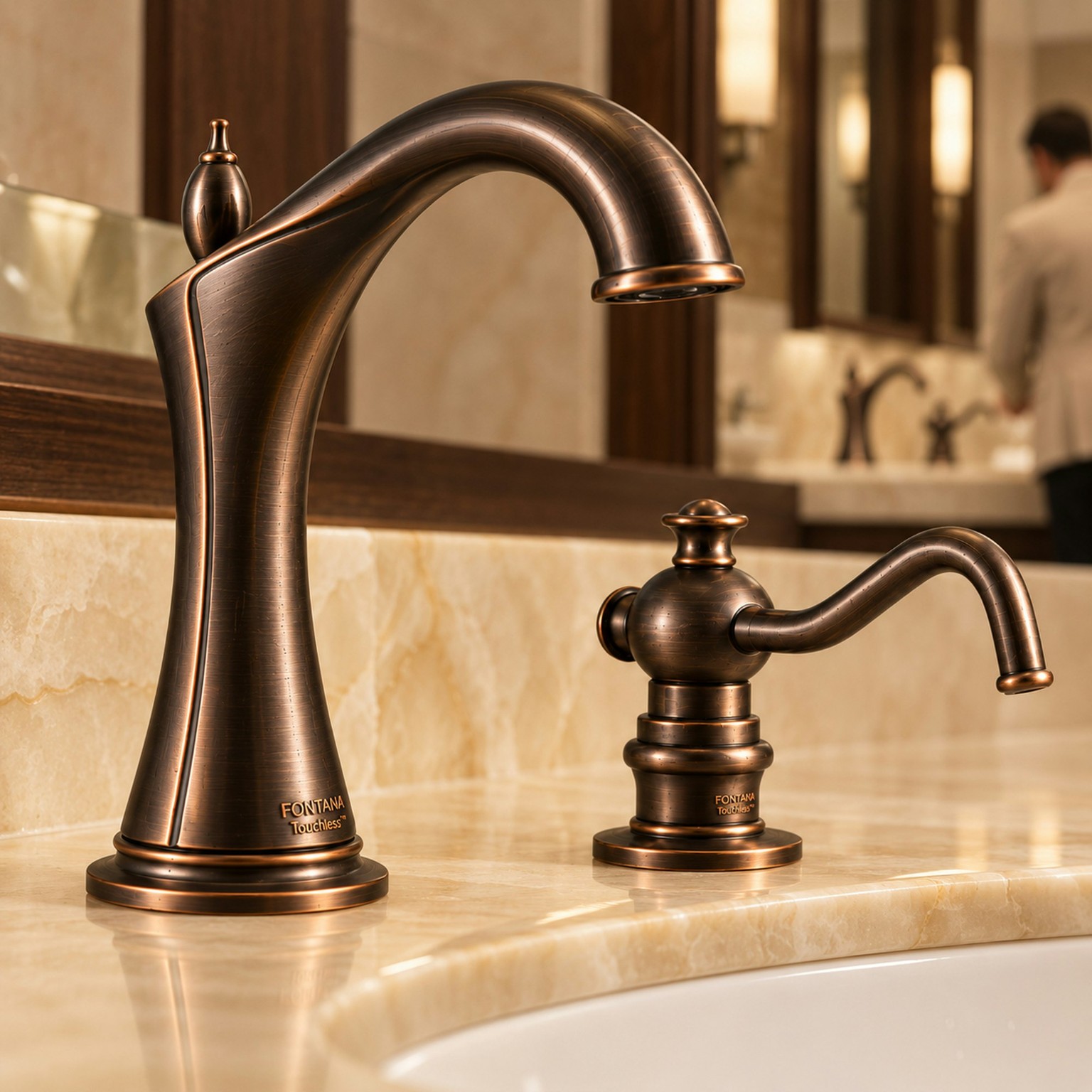
Purchase price does not tell the whole ownership story. A low-cost sensor faucet may be expensive if its solenoid is hard to reach. A specialty shower may be difficult to maintain if replacement cartridges are unavailable. Aggressive cleaners can also damage decorative finishes and shorten service life.
What to do instead
Before approval, request the spare-parts list, warranty, compatible cleaning instructions, exploded view, common service procedures, and expected access path to critical components. For multi-property portfolios, compare the number of different cartridges, power modules, and filters staff would need to stock.
Build a maintenance plan around failure modes
Match checks to the component
Inspect aerators for reduced or uneven flow, hose connections for seepage, drains for slow discharge, shower seals for gaps, and sensor assemblies for weak batteries or false triggering. Frequency depends on usage, water quality, manufacturer guidance, and the operating environment.
Keep inventory practical
A resort may benefit from standardizing a small set of replaceable valve components rather than purchasing dozens of visually similar but mechanically incompatible models. Consider downtime and labor cost alongside the price of the replacement part.
Useful deliverable: a model-specific service plan with part numbers and cleaning limitations.
Declaring completion before functional testing
A polished room is not necessarily a completed installation. A faucet can leak only while pressurized, a shower can overshoot its intended temperature, and a floor can hold water despite an attractive finish. These defects often emerge only when the room returns to daily use.
What to do instead
Create a punch-list by system rather than appearance alone. Verify supply and drain connections under operation; test mixed-water temperature and controls; observe drainage and splash; check sensor start-stop behavior; inspect sealant and finish defects; and confirm required electrical and accessibility checks.
Use a functional handover instead of a visual sign-off
Demonstrate the room to the owner
Show how to isolate water, replace consumables, clean finishes safely, and identify a malfunction. Test each outlet and control in every operating mode. Record open defects with an owner, correction date, and retest result.
Scale the process for multi-room projects
Hotels can use room-by-room acceptance sheets; malls and stadiums can use asset IDs to connect individual fixture test results with future maintenance records. The goal is a traceable functional acceptance, not a stack of identical boilerplate notes.
Useful deliverable: a signed commissioning checklist with deficiencies closed or assigned.
A practical pre-installation verification table
Use this simple comparison when reviewing manufacturer submittals and contractor proposals.
| Project item | Verify before purchase | Verify at handover |
|---|---|---|
| Sink faucet | Mounting, spout reach, fittings, pressure, category-appropriate flow | Leak test, splash pattern, shutoff access |
| Shower system | Valve capacity, rough-in depth, outlet demand, waterproofing | Temperature limit, diversion, drainage, sealing |
| Sensor faucet | Power, mixing, detection zone, solenoid access | Activation, timeout, service access, no false triggers |
| Public restroom | Accessible clearances, fixture use class, maintenance strategy | Reach and clearance inspection, operating instructions |
Where these mistakes matter most
Homes and renovations
Coordinate fixture dimensions, waterproofing, shutoffs and future repairs before closing walls or ordering custom finishes.
Hotels and resorts
Standardize components and phase room closures to protect guest experience and reduce prolonged out-of-service rooms.
Malls and office buildings
Favor durable, maintainable lavatory fixtures with access to batteries, solenoids, filters and replacement parts.
Stadiums and venues
Plan for peak usage, high-frequency cleaning, vandal resistance, reliable sensor operation and accessible circulation.
Home improvement mistakes: technical FAQs
These answers address common purchase and installation questions.
What should be checked before ordering a new faucet?
Confirm mounting-hole pattern, spout reach, deck thickness, connection threads, water pressure, flow requirements and availability of repair parts. Review the exact model drawing.
Do low-flow faucets always qualify for WaterSense?
No. WaterSense labeling applies only to eligible product categories and certified models. Private bathroom sink faucets and public lavatory faucets are not interchangeable categories.
What is the biggest mistake when installing a multi-outlet shower?
Failing to calculate simultaneous outlet demand and confirm the valve, diverter, supply piping and hot-water source can serve the selected combination.
Is a touchless faucet automatically ADA-compliant?
No. Accessibility depends on the complete installed configuration, including clearances, operability, reach and the applicable provisions of the accessibility standards.
How can commercial operators reduce renovation downtime?
Standardize serviceable components, stage materials before closure, document shutoff locations, inspect the rough-in before finishes and retain a structured commissioning record.
Trusted technical resources
Detailed manufacturer installation instructions and current local requirements take priority over generic renovation advice.
- EPA WaterSense: Bathroom Faucets — private-lavatory specifications and labeling context.
- EPA WaterSense: Showerheads — flow, spray force and coverage considerations.
- EPA WaterSense: Homes Technical Reference Manual — home water-efficiency fact sheets.
- U.S. Department of Justice: 2010 ADA Standards — accessibility provisions for applicable covered facilities.
Related WikiHomeImprovements resources
Installation manuals and recent fixture guides · Fixture finishes and touchless faucet resources · Installation case studies
Plan the project before buying the fixture
Start with measured conditions, verified product drawings, installation instructions and a documented testing plan. Whether the work is one shower replacement or a multi-building restroom upgrade, early coordination is the most dependable way to prevent callbacks, moisture damage and costly downtime.
Editorial note: This article provides general planning and specification guidance. Check local regulations, permit requirements and the exact manufacturer documentation for each installation. For structural, electrical, gas or concealed plumbing work, consult qualified professionals.