
Top 10 WikiHomeImprovements Mistakes to Avoid
The most expensive home-improvement mistakes often happen before installation: missing measurements, incompatible plumbing, weak waterproofing details and unplanned maintenance. This guide explains what to check before renovating bathrooms, showers, kitchens and high-traffic commercial facilities.
Practical guidance for homeowners, architects, plumbing contractors, hospitality operators and facility teams.

Why costly renovation errors happen
Home improvement is not simply the process of choosing new finishes. Faucets, tile, showers and sensor fixtures depend on plumbing capacity, waterproofing, spatial clearances and accessible service components. A product can perform well in a showroom and fail in the field when the installation conditions differ from its design assumptions.
For a modest bathroom refresh, the largest risks are commonly concealed connections and mismatched dimensions. For hotels, stadiums, shopping centers and shared-use facilities, the same oversight is multiplied across hundreds of fixtures, increasing disruption and repair expense.
Read more about project planning
Before purchasing, create a fixture schedule identifying the product, space, supply connection, drain requirement, mounting surface, approximate installation sequence and responsible trade. Mark every item needing manufacturer confirmation. Treat field verification, inspection and operational testing as real project activities rather than optional last steps.
Planning Without a Defined Scope
A renovation can appear inexpensive until electrical relocation, uneven substrate, concealed water damage, and finish repairs become change orders. Define the work before choosing fixtures.
How to avoid it
Document existing dimensions, photographs, utility locations, desired performance, and whether the work changes layout or simply replaces finishes. Identify what remains in service during construction.
Learn more about planning without a defined scope
Commercial project consideration
For hotels, sequence rooms or floors in phases; for malls and stadiums, establish closures, public detours, event blackouts, and temporary accessible restroom provisions.
Keep approved submittals, installer instructions, and inspection notes with the project record so owners can confirm decisions and maintain the installation later.

Ignoring Existing Plumbing Conditions
A beautiful new faucet or shower will not correct undersized supply piping, poor drainage, fluctuating pressure, or deterioration hidden behind the wall.
How to avoid it
Inspect shutoff valves, supply sizes, visible corrosion, leaks, drain slope and trap arrangement. Measure static and flowing pressure when appropriate; use a licensed professional to assess concealed systems and code-critical changes.
Learn more about ignoring existing plumbing conditions
Commercial project consideration
Large multi-outlet showers require a simultaneous-flow review, not a catalog-based assumption that every body jet can operate at full demand.
Keep approved submittals, installer instructions, and inspection notes with the project record so owners can confirm decisions and maintain the installation later.

Choosing Fixtures by Appearance Alone
A matching finish is not a substitute for checking the faucet body, connection size, mounting-hole pattern, cartridge, spout reach, replacement parts and service access.
How to avoid it
Compare the manufacturer’s dimensional drawing, hole count, minimum/maximum deck thickness, inlet threads, pressure range, flow rate, applicable certifications, and warranty exclusions.
Learn more about choosing fixtures by appearance alone
Commercial project consideration
Institutional buyers should standardize serviceable cartridges, sensor power modules and finishes across restrooms where feasible to simplify inventory.
Keep approved submittals, installer instructions, and inspection notes with the project record so owners can confirm decisions and maintain the installation later.
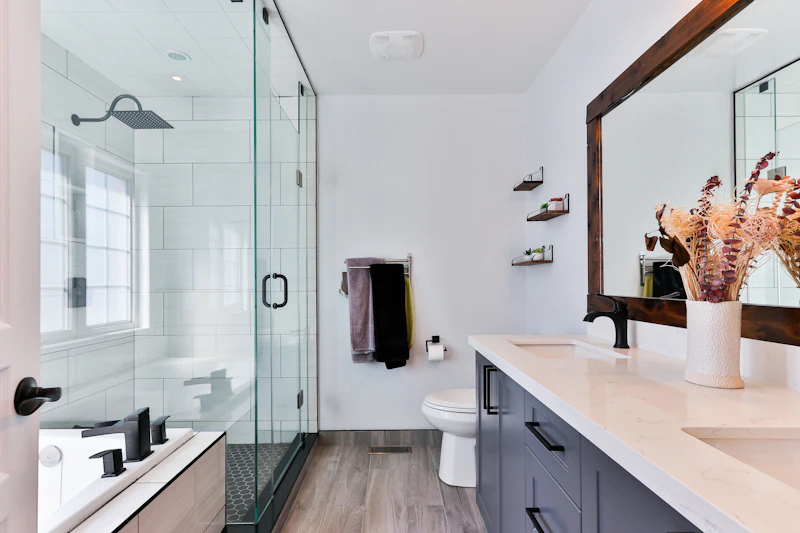
Skipping Shower Waterproofing Details
Grout and tile are finish materials, not the primary waterproofing system. Poorly planned penetrations and transitions can allow moisture into adjacent rooms and structural components.
How to avoid it
Specify a continuous approved waterproofing assembly, correct drain interface, sloped shower floor, niche and bench detailing, pipe penetration sealing, and required testing before finish installation. Follow the system manufacturer and local code.
Learn more about skipping shower waterproofing details
Commercial project consideration
Hospitality suites and spa wet areas need especially careful curb, threshold, and adjoining-room transitions because water damage can take multiple rooms offline.
Keep approved submittals, installer instructions, and inspection notes with the project record so owners can confirm decisions and maintain the installation later.


Mixing Incompatible Shower Components
A thermostatic valve, diverter, showerhead, handheld spray and body jets may look coordinated while exceeding the available flow or demanding incompatible rough-ins.
How to avoid it
Prepare a simple schematic identifying each outlet, diverter positions, valve capacity, pressure losses, hot-water availability and future access to service components. Confirm the rough-in depth against final wall thickness.
Learn more about mixing incompatible shower components
Commercial project consideration
Use a commissioning checklist for multi-shower installations in gyms, resorts and locker rooms to verify outlet selection and temperature stability.
Keep approved submittals, installer instructions, and inspection notes with the project record so owners can confirm decisions and maintain the installation later.

Overlooking Water and Energy Performance
Selecting the lowest advertised flow without checking application or performance can cause weak spray, slow filling, long dwell time, or the wrong fixture specification.
How to avoid it
Compare independently certified WaterSense products where eligible and verify performance under the actual pressure range. EPA WaterSense private-lavatory faucet requirements are not interchangeable with public-lavatory rules. For showers, evaluate spray force and coverage, not flow alone.
Learn more about overlooking water and energy performance
Commercial project consideration
Commercial washrooms benefit from zone-by-zone demand estimates, leak detection, metered fixtures when suitable, and clear maintenance ownership.
Keep approved submittals, installer instructions, and inspection notes with the project record so owners can confirm decisions and maintain the installation later.

Treating Touchless Fixtures as Plug-and-Play
Sensor faucets and automatic soap dispensers depend on reliable power, stable detection zones, correct mounting geometry and maintainable control components.
How to avoid it
Check AC or battery power requirements, sensor alignment, reflective basin surfaces, solenoid location, isolation stops, inline filtration, mixing method and drainage. Test against accidental activation and missed hand detection.
Learn more about treating touchless fixtures as plug-and-play
Commercial project consideration
In airports, arenas and malls, plan battery replacement intervals or managed power distribution, spare parts and staff training before rollout.
Keep approved submittals, installer instructions, and inspection notes with the project record so owners can confirm decisions and maintain the installation later.
Forgetting Accessibility and User Reach
A touchless fixture is not automatically an accessible restroom. Clear floor space, knee and toe clearance, mounting height, reachable accessories and usable controls are all part of accessibility.
How to avoid it
Use the applicable accessibility standard and jurisdictional rules. Under the U.S. 2010 ADA Standards, covered lavatories and faucets must meet the relevant sections, including 606 and 309. Verify the actual installed arrangement rather than relying on a product badge.
Learn more about forgetting accessibility and user reach
Commercial project consideration
At stadiums and hospitality properties, consider accessible circulation and accessory positions alongside the sink, not only the fixture selected.
Keep approved submittals, installer instructions, and inspection notes with the project record so owners can confirm decisions and maintain the installation later.
Neglecting Maintenance and Replacement Parts
A low upfront quote can lead to expensive downtime if a cartridge is discontinued, a control box is boxed into a wall, or special tools are needed for ordinary maintenance.
How to avoid it
Ask for exploded diagrams, parts numbers, recommended cleaning agents, warranty terms, replacement modules, service clearances and an inspection schedule. Keep as-built photos and manufacturer manuals.
Learn more about neglecting maintenance and replacement parts
Commercial project consideration
Facility teams should track failure modes and stock critical consumables for high-traffic sinks, flush controls, automatic dispensers and showers.
Keep approved submittals, installer instructions, and inspection notes with the project record so owners can confirm decisions and maintain the installation later.
Finishing Without Inspection or Handover
A renovation is not complete simply because the wall is tiled and the faucet turns on. Untested seals, improperly adjusted temperature limits and unlabeled isolation valves invite future callbacks.
How to avoid it
Complete leak tests, flow and temperature checks, shower drainage observation, sensor calibration, GFCI checks where applicable, finish inspection, accessibility review and owner orientation. Record deficiencies and signoff.
Learn more about finishing without inspection or handover
Commercial project consideration
For multi-site operators, use one digital checklist per room or fixture and retain commissioning reports with asset records.
Keep approved submittals, installer instructions, and inspection notes with the project record so owners can confirm decisions and maintain the installation later.
A practical pre-installation verification table
Use this simple comparison when reviewing manufacturer submittals and contractor proposals.
| Project item | Verify before purchase | Verify at handover |
|---|---|---|
| Sink faucet | Mounting, spout reach, fittings, pressure, category-appropriate flow | Leak test, splash pattern, shutoff access |
| Shower system | Valve capacity, rough-in depth, outlet demand, waterproofing | Temperature limit, diversion, drainage, sealing |
| Sensor faucet | Power, mixing, detection zone, solenoid access | Activation, timeout, service access, no false triggers |
| Public restroom | Accessible clearances, fixture use class, maintenance strategy | Reach and clearance inspection, operating instructions |
Where these mistakes matter most
Homes and renovations
Coordinate fixture dimensions, waterproofing, shutoffs and future repairs before closing walls or ordering custom finishes.
Hotels and resorts
Standardize components and phase room closures to protect guest experience and reduce prolonged out-of-service rooms.
Malls and office buildings
Favor durable, maintainable lavatory fixtures with access to batteries, solenoids, filters and replacement parts.
Stadiums and venues
Plan for peak usage, high-frequency cleaning, vandal resistance, reliable sensor operation and accessible circulation.
Home improvement mistakes: technical FAQs
These answers address common purchase and installation questions.
What should be checked before ordering a new faucet?
Confirm mounting-hole pattern, spout reach, deck thickness, connection threads, water pressure, flow requirements and availability of repair parts. Review the exact model drawing.
Do low-flow faucets always qualify for WaterSense?
No. WaterSense labeling applies only to eligible product categories and certified models. Private bathroom sink faucets and public lavatory faucets are not interchangeable categories.
What is the biggest mistake when installing a multi-outlet shower?
Failing to calculate simultaneous outlet demand and confirm the valve, diverter, supply piping and hot-water source can serve the selected combination.
Is a touchless faucet automatically ADA-compliant?
No. Accessibility depends on the complete installed configuration, including clearances, operability, reach and the applicable provisions of the accessibility standards.
How can commercial operators reduce renovation downtime?
Standardize serviceable components, stage materials before closure, document shutoff locations, inspect the rough-in before finishes and retain a structured commissioning record.
Trusted technical resources
Detailed manufacturer installation instructions and current local requirements take priority over generic renovation advice.
- EPA WaterSense: Bathroom Faucets — private-lavatory specifications and labeling context.
- EPA WaterSense: Showerheads — flow, spray force and coverage considerations.
- EPA WaterSense: Homes Technical Reference Manual — home water-efficiency fact sheets.
- U.S. Department of Justice: 2010 ADA Standards — accessibility provisions for applicable covered facilities.
Related WikiHomeImprovements resources
Installation manuals and recent fixture guides · Fixture finishes and touchless faucet resources · Installation case studies

Plan the project before buying the fixture
Start with measured conditions, verified product drawings, installation instructions and a documented testing plan. Whether the work is one shower replacement or a multi-building restroom upgrade, early coordination is the most dependable way to prevent callbacks, moisture damage and costly downtime.
Editorial note: This article provides general planning and specification guidance. Check local regulations, permit requirements and the exact manufacturer documentation for each installation. For structural, electrical, gas or concealed plumbing work, consult qualified professionals.