
shower columnshower panelshower panel drawbacksshower panel installationshower panel systemshower tower
Bathroom Design & Plumbing Guide
The Complete Guide to Shower Panels: Benefits, Drawbacks, and Modern Bathroom Trends
Shower panel systems combine multiple water-delivery functions into one
vertical wall-mounted fixture. Often called shower towers or shower columns,
these systems may include rainfall shower heads, handheld sprays, body jets,
mixing controls, diverters, and additional outlets.
This guide examines how shower panels work, their advantages and limitations,
water-pressure requirements, installation considerations, maintenance,
serviceability, and the design factors that should be reviewed before
selecting a system.
Shower Panels
Installation
Water Pressure
Body Jets
Maintenance
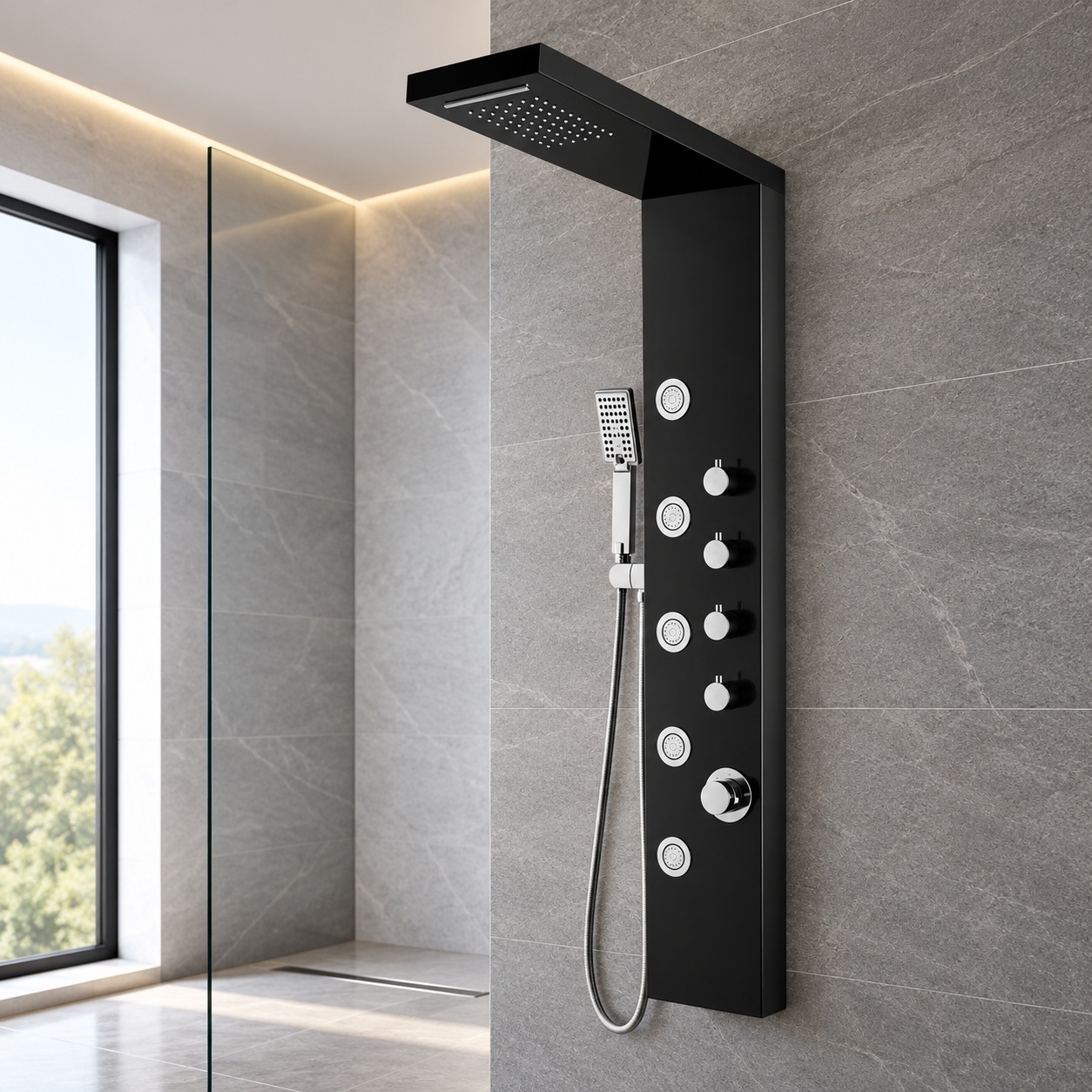
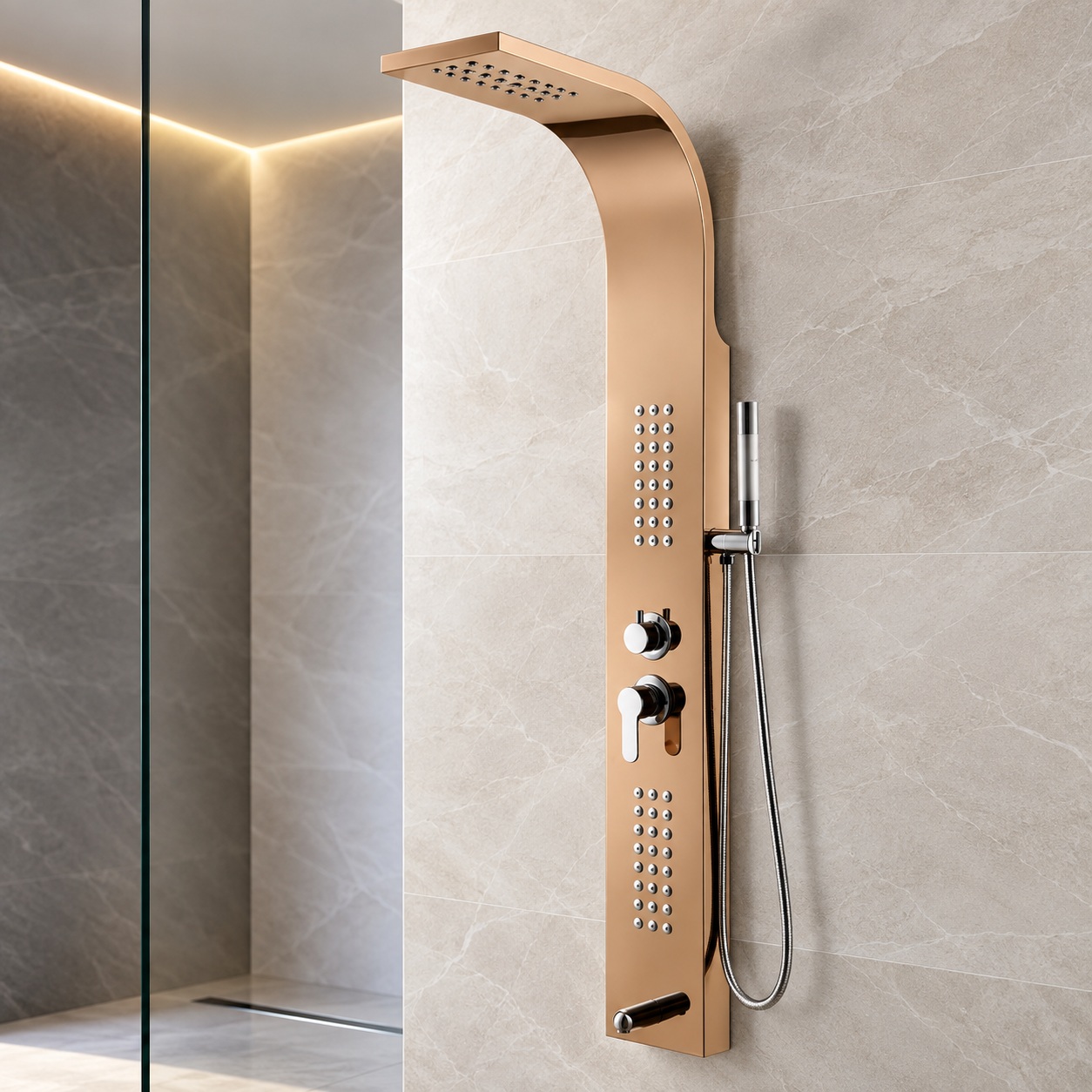
Modern shower panel configuration integrating several functions within one
vertical fixture.
Multiple shower functions integrated into one wall-mounted assembly.
Many models are installed over an already finished shower wall.
Pressure and available water flow should be evaluated before selection.
Consider replacement parts, cleaning and access to internal components.
What Is a Shower Panel?
A shower panel is a vertical fixture mounted on a shower wall that combines
multiple water-delivery and control functions into one assembly. Depending
on the model, a panel may contain an overhead rainfall shower, handheld
shower wand, body massage jets, lower outlet, mixer, thermostatic control,
or diverter.
Unlike a fully concealed shower system, much of the functional hardware may
be arranged inside or directly behind the panel. Traditional custom systems
often install individual valves, body sprays, shower arms and diverters
separately within the wall.
This consolidated format is one reason shower towers are frequently
considered for renovation projects where a user wants several functions
without distributing numerous trim components across the enclosure.
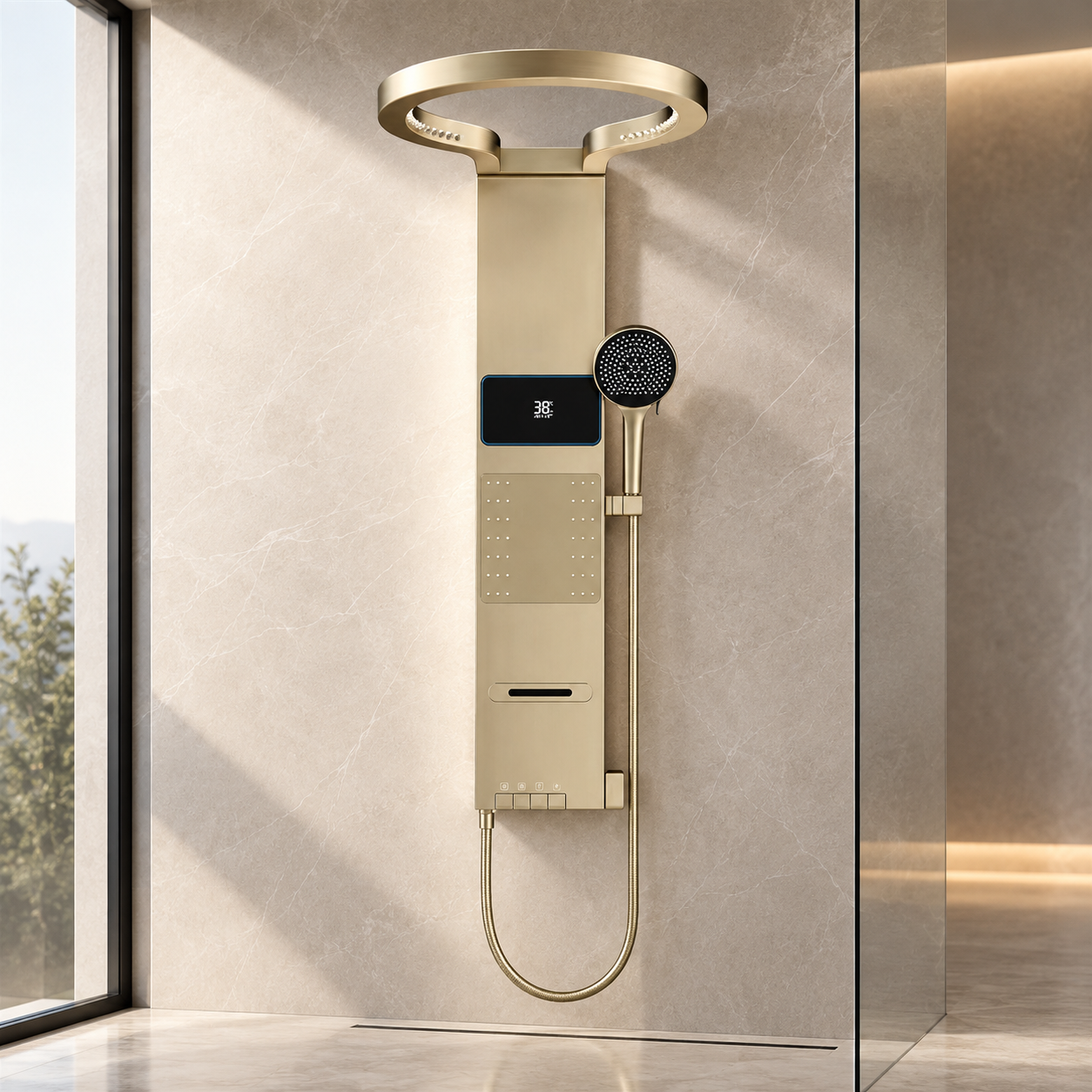
body sprays into one vertical fixture.
How Does a Shower Panel Work?
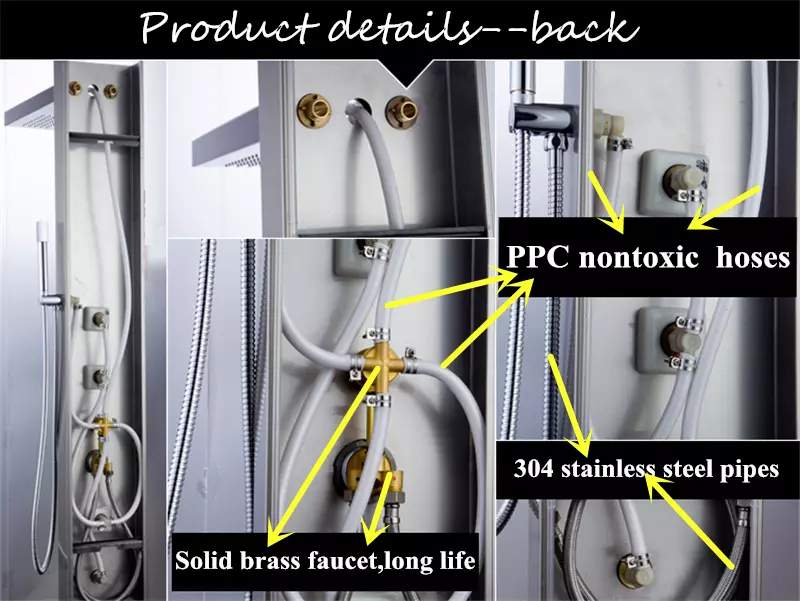
Most shower panels receive hot and cold water through connections behind the
panel. Internal hoses, passages, valves and diverters distribute mixed water
to the selected outlet. Exact arrangements vary considerably between models,
so manufacturer installation documentation should always be reviewed before
rough plumbing is finalized.
Water Supply
Hot and cold lines supply the mixing valve or temperature-control mechanism.
Control & Diverter
Controls regulate temperature, volume and which water outlet is operating.
Water Outlets
Mixed water is routed to rainfall sprays, body jets, handheld showers or other outlets.
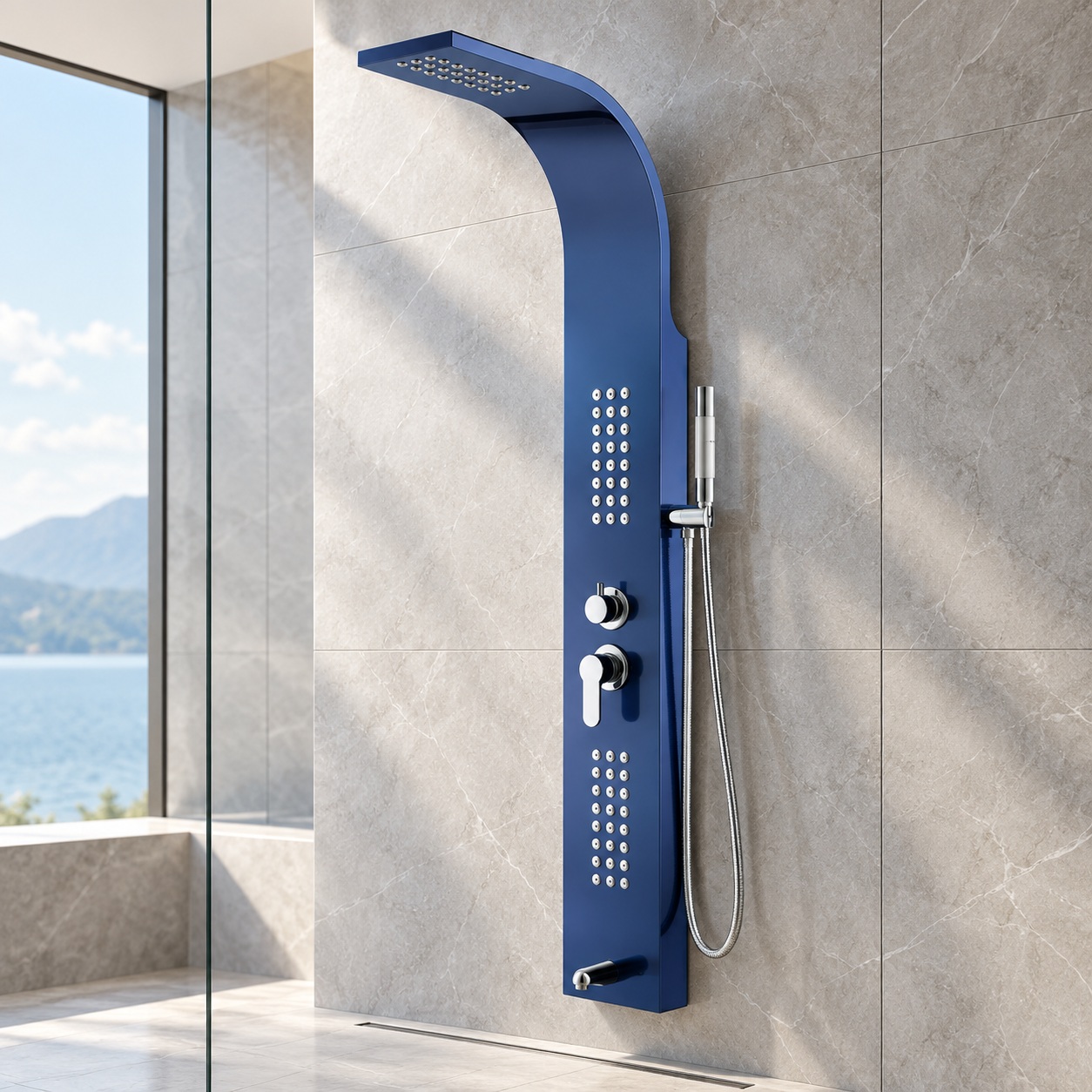
Benefits of Shower Panels
The primary advantage of a shower panel is consolidation. Several functions
can be placed within a single wall-mounted fixture rather than being installed
as separate trim pieces around the shower enclosure.
Practical Benefits
- Multiple shower functions in one fixture
- Integrated rainfall shower on many models
- Handheld shower commonly included
- Body jets without separate wall-mounted spray bodies
- Compact organization of outlets and controls
- Can simplify some renovation projects
- Available in numerous materials and finishes
Design Benefits
- Creates one visually organized shower-wall element
- Coordinates multiple water functions vertically
- Can reduce the number of visible trim components
- Fits many contemporary bathroom designs
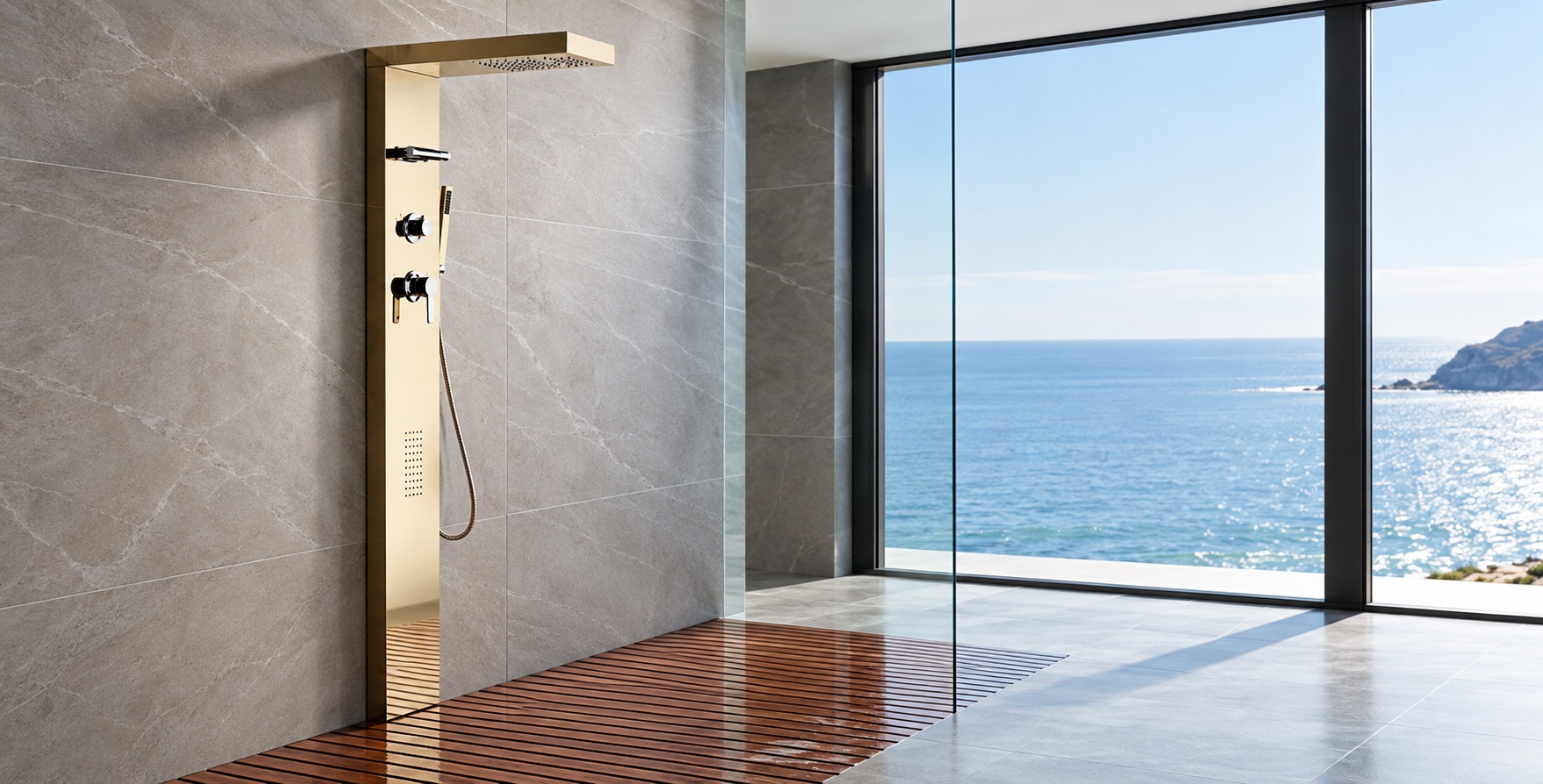
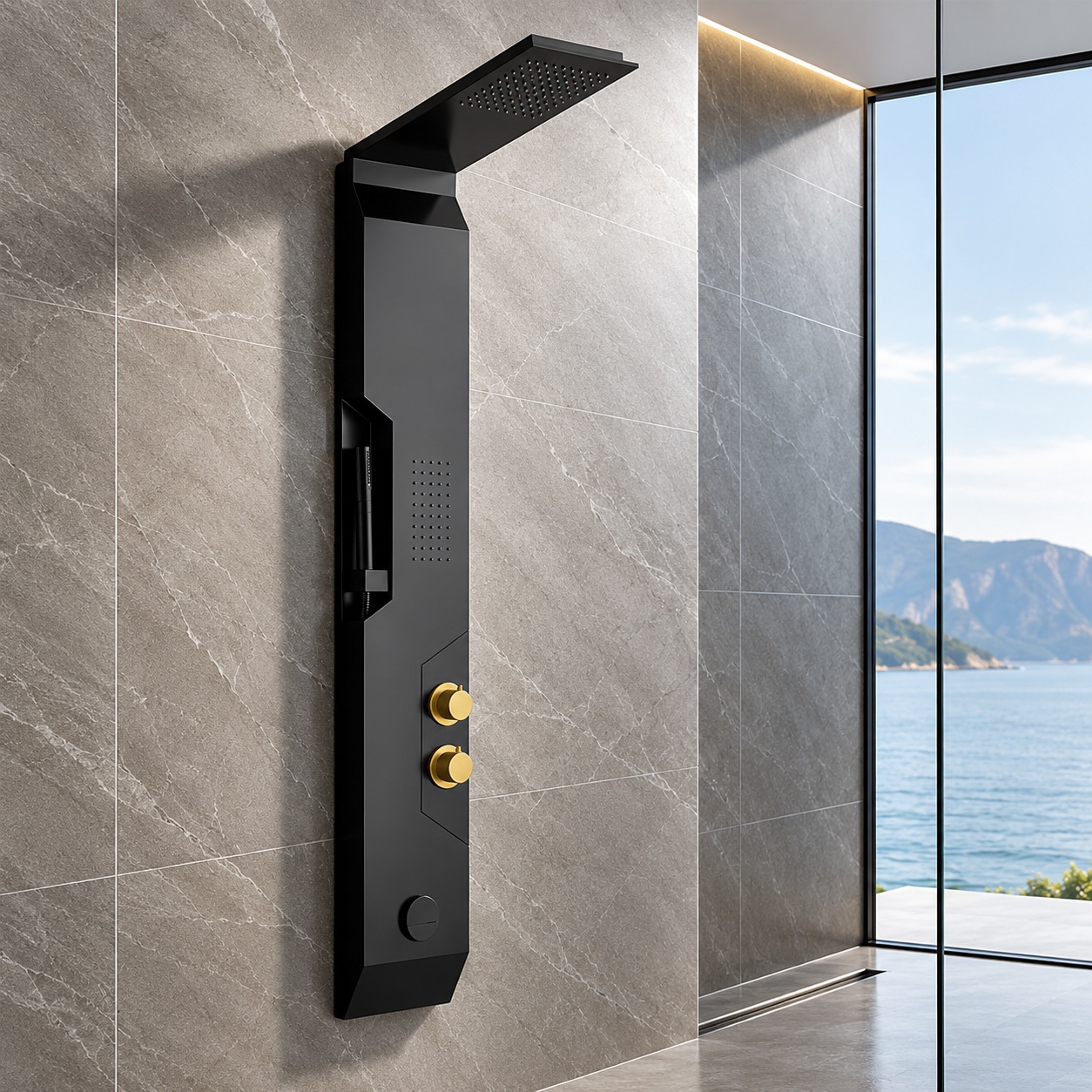
- Available in stainless, dark and warm metallic finishes
- Can provide a compact alternative to a distributed multi-outlet system
Potential Drawbacks of Shower Panels
Shower panels are not automatically appropriate for every bathroom.
The same integrated construction that makes a panel convenient can also
limit customization and affect long-term service access.
What Should Be Evaluated?
- Multi-outlet systems may require greater available water flow.
- Body-jet positions are largely fixed by the panel itself.
- Large panels may interfere with niches, benches or grab bars.
- Replacement components differ between manufacturers.
- Internal hoses or valves may require panel removal for service.
- Customization is more limited than with individually installed components.
Shower Panel vs. Traditional Built-In Shower System
The difference is not simply cosmetic. Shower panels consolidate components
within one vertical assembly, while conventional concealed systems allow
individual outlets and controls to be positioned independently.
| Consideration | Shower Panel | Built-In Shower |
|---|---|---|
| Component Layout | Functions concentrated within one vertical unit. | Outlets and controls can be located separately. |
| Wall Work | Many models mount over a finished wall. | Often requires concealed plumbing inside the wall. |
| Customization | Determined primarily by the panel configuration. | Greater freedom to select and position components. |
| Body Sprays | Usually built into the panel face. | Can be placed independently around the enclosure. |
| Service Access | May require removing or opening the panel. | Depends on valve and access-panel design. |
| Renovation Use | Can be useful where extensive wall reconstruction is undesirable. | Works well where walls are open and greater customization is required. |
Water Pressure and Plumbing Requirements
Available pressure and flow are important technical considerations,
particularly when a shower panel contains rainfall delivery, body sprays
and a handheld shower.
Review the manufacturer’s operating-pressure range, supply connection sizes,
flow information and instructions regarding simultaneous outlet operation.
Pipe sizing and hot-water capacity may also influence performance.
This can be especially important in older buildings. The ability to connect a
panel physically to existing water supplies does not automatically guarantee
that several water outlets can operate simultaneously as intended.
For additional planning information, review the
Shower Systems & Tub Design FAQ
.
Installation Considerations
A shower panel should be coordinated with the complete shower enclosure.
Wall construction, plumbing locations, user height, waterproofing, door
movement, niches and service access can all influence installation.
Pre-Installation Checklist
- Confirm panel width, height and projection.
- Check hot and cold water connection locations.
- Review pressure and flow requirements.
- Confirm the wall can support the mounting brackets.
- Coordinate mounting height with intended users.
- Verify overhead outlet clearance from the ceiling.
- Review body-jet locations relative to user height.
- Check clearance around niches, benches and grab bars.
- Confirm shower doors will not interfere with the panel.
- Maintain waterproofing around wall penetrations.
- Plan access for future servicing.
Body Jets and Multi-Function Shower Panels
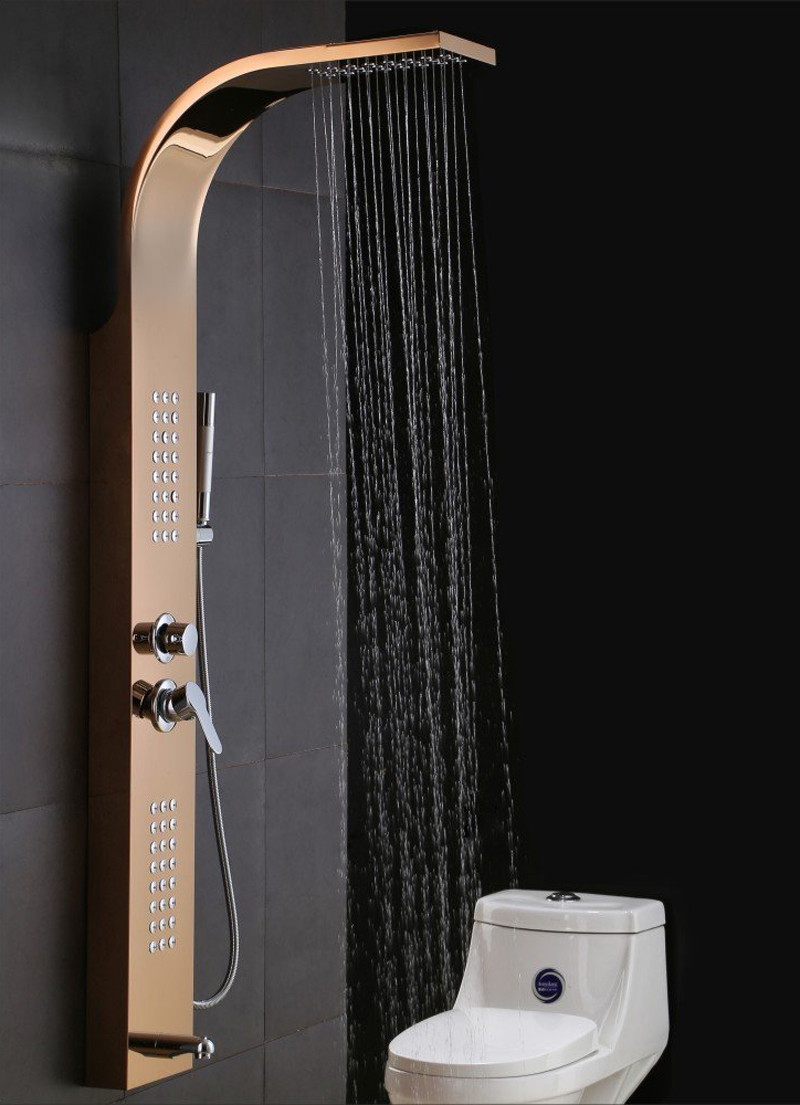
Body jets are among the features that distinguish many shower panels from
basic shower columns. Instead of using separate wall-mounted spray bodies,
the jets are integrated directly into the face of the vertical panel.
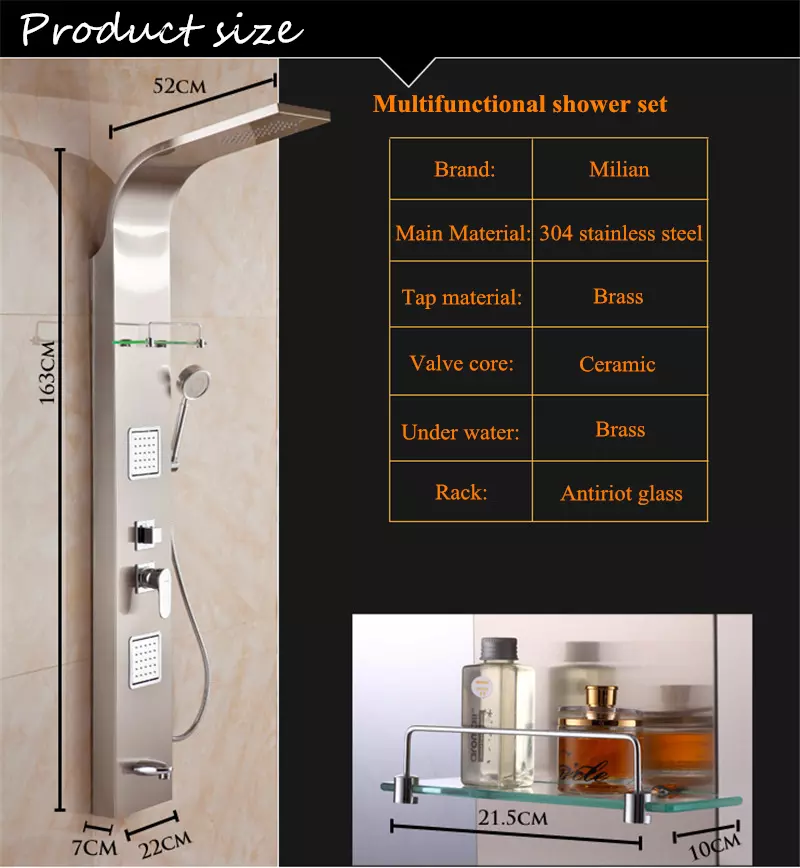
This simplifies their visual organization but means spray height and spacing
are largely fixed by the panel dimensions. Users should review dimensional
drawings rather than estimating jet positions from photographs.
When several outlets are intended to operate simultaneously, plumbing demand
becomes increasingly important. The system should be evaluated according to
the actual functions expected to operate together.
For additional examples, see
shower systems with body jets
.
Body-Jet Planning Factors
- Vertical jet position
- Panel mounting height
- User height range
- Number of operating outlets
- Available flow and pressure
- Temperature-control arrangement
- Cleaning and nozzle maintenance
Maintenance and Serviceability
Shower-panel maintenance includes more than cleaning the visible finish.
Spray nozzles, hoses, connections, cartridges, diverters and internal
components may eventually need inspection or replacement.
Mineral deposits can gradually affect spray patterns, particularly in
hard-water conditions. Nozzles should be maintained according to the
manufacturer’s instructions, while unsuitable abrasive cleaners should be
avoided on decorative finishes.
Before purchasing a panel, determine how internal parts are accessed and
whether common service components can be obtained separately.
Long-term serviceability can be just as important as appearance, particularly
when the panel will be installed in a frequently used bathroom.
How to Choose a Shower Panel
A useful comparison should start with the physical bathroom and plumbing
conditions rather than appearance alone.
Panel Dimensions
Measure wall space, ceiling clearance, enclosure dimensions and nearby fixtures.
Water Pressure
Compare manufacturer requirements with actual building pressure and flow.
Outlet Functions
Determine which rainfall, hand shower and body spray functions are actually required.
Temperature Control
Review the type of mixing, pressure-balancing or thermostatic control provided.
Replacement Parts
Check whether hoses, cartridges and other service parts can be sourced independently.
Service Access
Understand how internal connections can be reached after the panel is installed.
Modern Shower Panel Design Trends
Current shower-panel designs increasingly use restrained vertical forms with
controls, rainfall outlets and body sprays organized within a single
architectural element.
Stainless steel remains common, while dark, brushed and warm metallic
finishes allow panels to coordinate with faucets, accessories and other
bathroom hardware.
Selection is also becoming more focused on factors that are difficult to
judge from product photography, including plumbing capacity, service access,
replacement components and internal valve arrangements.
For renovation projects, a well-specified shower panel is generally one whose
dimensions and technical requirements match the actual room rather than
simply offering the greatest number of spray functions.
Shower Panel Manufacturers
Shower panels are available from a range of plumbing and bathroom-fixture
manufacturers. Individual models can differ significantly, so dimensions,
pressure requirements, service access, controls and replacement-part
availability should be checked at the model level.
FontanaShowers
JunoShowers
Moen
Kohler
Grohe
Blue Ocean
Frequently Asked Questions
Are shower panels easier to install than built-in shower systems?
Many panels consolidate several functions into one assembly and may mount
over a finished wall. Installation difficulty still depends on supply
locations, waterproofing, wall construction and manufacturer requirements.
Do shower panels require high water pressure?
Requirements vary by product. Multi-outlet systems can require greater
available flow when several functions are operating, so model-specific
pressure and flow requirements should be reviewed.
Can a shower panel replace an existing shower?
Sometimes. Existing supply locations, wall conditions, waterproofing,
enclosure dimensions and plumbing capacity should first be evaluated.
Are shower panels difficult to maintain?
Routine cleaning is usually straightforward. Long-term maintenance depends
more heavily on access to hoses, valves, cartridges, nozzles and available
replacement components.
What should be measured before buying a shower panel?
Check usable wall width, panel height, ceiling clearance, shower depth,
door movement, niches, nearby accessories and hot and cold supply locations.
Continue Researching Shower Systems
Detailed Shower Panel Pros and Cons
For another technical overview focused specifically on advantages and
limitations of panel-style shower systems, see:
Are Shower Panels a Good Choice?
Shower panels provide a practical method of organizing rainfall showering,
handheld delivery, body sprays and controls within one vertical fixture.
Their primary advantage is integration, particularly where several functions
are desired without distributing numerous shower components around the wall.
Their limitations should also be considered. Body-jet position, available
water pressure, panel dimensions, replacement parts and access to internal
components can all influence whether a particular system is appropriate.
For renovation work, compare the panel against the actual room: available
wall area, enclosure dimensions, water-supply conditions, mounting height,
waterproofing and future service access. Those factors generally provide a
more useful basis for selection than appearance or the number of functions
alone.