
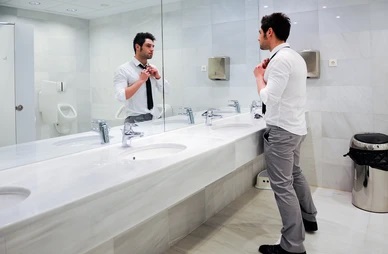
Operational Hygiene Considerations in High-Traffic Public Restrooms
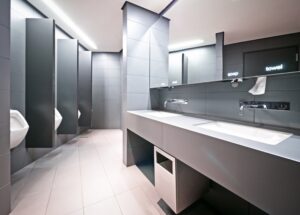
Hygiene management in public restrooms is strongly influenced by operational conditions that emerge in high-traffic environments where fixtures are used continuously throughout the day. Facility planners and building engineers often evaluate practical factors such as surface contamination from frequently touched faucet handles and soap pumps, splash-out from poorly aligned faucet streams, residue accumulation around manual dispensers, inconsistent soap delivery during peak usage periods, aerator clogging from mineral-heavy municipal water supplies, and maintenance challenges when fixtures require frequent manual cleaning or servicing. These variables help explain why restroom design has increasingly moved toward touch-free technologies that reduce contact surfaces while supporting more predictable hygiene workflows. By incorporating sensor-activated faucets, automatic soap dispensers, touch-free flushing systems, and controlled water-flow mechanisms, modern restroom infrastructure helps minimize cross-contact points and improve operational cleanliness across environments such as airports, hospitals, universities, office complexes, and other high-traffic public facilities.



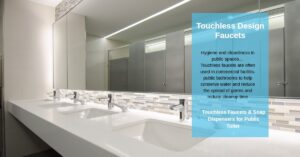



Question: What are the most common hygiene issues found in public restrooms?
Answer: Common issues include the presence of germs on surfaces, insufficient handwashing facilities, lack of soap or paper towels, clogged toilets, and poor overall cleanliness.
Question: How can touchless technology improve hygiene in public restrooms?
Answer: Touchless technology, such as sensor-based faucets, toilets, and soap dispensers, helps minimize contact with potentially contaminated surfaces, reducing the spread of germs.
Question: What role does proper ventilation play in maintaining hygiene in public restrooms?
Answer: Proper ventilation helps reduce moisture and odors, which can discourage the growth of mold and bacteria, thereby maintaining a healthier environment.
Question: How can the layout and design of a public restroom impact its hygiene?
Answer: A well-designed restroom with easy-to-clean surfaces and adequate space between fixtures can prevent the accumulation of dirt and bacteria and facilitate more effective cleaning.
Question: What are the benefits of using antimicrobial materials in public restrooms?
Answer: Antimicrobial materials can inhibit the growth of bacteria, mold, and fungi on surfaces, making them especially beneficial for high-touch areas like faucets, handles, and countertops.
Question: How often should public restrooms be cleaned to maintain proper hygiene?
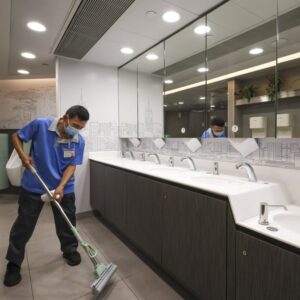
Answer: Public restrooms should be cleaned multiple times a day depending on the frequency of use. High-traffic areas may require more frequent cleaning to address ongoing use and prevent hygiene issues.
Question: What is the importance of providing adequate handwashing facilities in public restrooms?
Answer: Ensuring that handwashing facilities are always functional and well-stocked with soap and paper towels encourages proper hand hygiene, crucial for preventing the spread of infectious diseases.
Question: How can signage and educational materials improve hygiene in public restrooms?
Answer: Signage that instructs and reminds users about proper handwashing techniques and restroom etiquette can significantly improve hygiene by influencing user behavior.
Question: What are the challenges of maintaining hygiene in public restrooms with high traffic?
Answer: High-traffic restrooms face challenges such as rapid depletion of supplies, increased litter, and more frequent occurrence of clogged fixtures, all of which require diligent management and maintenance.
Question: What innovative cleaning technologies are being used to improve hygiene in public restrooms?
Answer: New technologies include UV light cleaning systems, which can effectively kill bacteria and viruses without the need for chemical cleaners, and robotic cleaners that can automate the cleaning process, ensuring consistency and thoroughness.
Question: How effective are automated cleaning systems in maintaining restroom hygiene?
Answer: Automated cleaning systems are highly effective in maintaining restroom hygiene as they can be programmed to clean at regular intervals, ensuring constant sanitation. These systems typically use high-efficiency cleaning solutions and can reach areas that are often missed during manual cleaning.
Question: What impact does the choice of flooring and wall materials have on restroom hygiene?
Answer: The choice of flooring and wall materials can significantly impact hygiene. Non-porous materials like porcelain and sealed tiles resist moisture and inhibit bacterial growth, making them ideal for restrooms. Additionally, smoother surfaces are easier to clean and less likely to harbor pathogens.
Question: How can the management of consumables like soap and paper towels be optimized to improve hygiene?
Answer: Optimizing the management of consumables involves installing dispensers that deliver pre-measured amounts to reduce waste, using high-capacity dispensers to ensure availability, and choosing quality products that encourage proper usage. Monitoring systems can also be installed to alert staff when supplies are low.
Question: What are the best practices for waste management in public restrooms to enhance hygiene?
Answer: Best practices for waste management include providing enough bins to handle the volume of waste, positioning them strategically to encourage use, and opting for touchless waste bins to reduce contact with surfaces. Regular and frequent emptying of bins is also crucial to avoid overflow and reduce odor.
Question: How does regular maintenance of plumbing fixtures contribute to hygiene in public restrooms?
Answer: Regular maintenance of plumbing fixtures ensures they operate efficiently and remain free of leaks and clogs, which can contribute to unsanitary conditions. Well-maintained fixtures are less likely to harbor bacteria and provide a more hygienic environment for users.
Here are some detail the functionality, benefits, and operational aspects of Fontana Touchless Faucets, emphasizing their significant role in improving public restroom experiences and meeting hygiene and sustainability standards.
Question: How do Fontana Touchless Faucets enhance hygiene in public restrooms? Answer: Fontana Touchless Faucets minimize the need for physical contact with faucet handles, which are common touchpoints for germs and bacteria. This significantly reduces the spread of pathogens, enhancing hygiene in public spaces.
Question: What water-saving features do Fontana Touchless Faucets offer? Answer: These faucets are equipped with automatic shut-off mechanisms that stop the flow of water when not in use, preventing water wastage. Many models also feature adjustable flow rates to further optimize water conservation.
Question: How do Fontana Touchless Faucets contribute to user convenience in public restrooms? Answer: Fontana Touchless Faucets provide a hands-free operation, which is particularly convenient for users with mobility issues or when their hands are full. This ease of use improves the overall user experience in public facilities.
Question: What are the maintenance requirements for Fontana Touchless Faucets in high-traffic areas? Answer: Despite their advanced technology, Fontana Touchless Faucets are designed for low maintenance. They require periodic checks of their sensor and battery life, but their durable construction ensures they can handle high usage with minimal upkeep.
Question: How do Fontana Touchless Faucets support environmental sustainability? Answer: By reducing water consumption through precise flow control and automatic shut-off, Fontana Touchless Faucets help conserve water resources, aligning with environmental sustainability goals in building design.
Question: How do Fontana Touchless Faucets ensure reliability in public restrooms? Answer: Fontana Faucets are built with high-quality materials and advanced sensor technology to ensure reliability and durability. They are designed to withstand the wear and tear of high traffic and frequent use, ensuring long-term functionality.
Question: What design options are available with Fontana Touchless Faucets for public restrooms? Answer: Fontana offers a range of design options to suit different restroom aesthetics, from sleek and modern to more classic styles, ensuring that the faucets can integrate seamlessly with any restroom décor.
Question: How do Fontana Touchless Faucets handle temperature control to prevent scalding? Answer: Many Fontana Touchless Faucets include built-in temperature control settings that allow facility managers to preset a safe and comfortable water temperature, reducing the risk of scalding.
Question: What are the cost implications of installing Fontana Touchless Faucets in public restrooms? Answer: While the initial installation cost may be higher than traditional faucets, the long-term savings from reduced water usage and lower maintenance costs can make Fontana Touchless Faucets a cost-effective solution for public restrooms.
Question: How do Fontana Touchless Faucets align with public health regulations? Answer: By promoting better hygiene and reducing the potential for cross-contamination, Fontana Touchless Faucets help public restrooms meet health and safety regulations, which is crucial for facilities like hospitals, schools, and restaurants.
Sensor Accuracy for Touchless Bathroom Faucets
Touch vs. Touchless: How to Choose Between Them
For bathroom faucets, commercial or otherwise, one of the major considerations is between touch and touchless faucets. A touch faucet is turned on by touching a spout or handle, while a touchless faucet relies on sensors to detect movement or the presence of a hand to allow water to flow automatically. This reduces the spread of germs and improves hygiene, thus making touchless faucets quite popular in public restrooms and areas of heavy traffic. The choice between both lies in their advantages, but touchless technology is usually more effective and hygienic, hence suitable for commercial settings.
The current article represents a compilation of the reviews of various architectural firms about the design, functionality, and user experiences of Fontana touchless bathroom faucets and soap dispensers. It underlines why these products became so popular among architects, based on aspects such as hygiene, water efficiency, and modern aesthetics that meet the trends of contemporary bathroom designs.
This paper aims to discuss the suitability of the Fontana touchless faucet in relation to maintenance efficiency, cost-effectiveness, and longevity in government buildings. It records that touchless technology minimizes loss of water, thus diminishing the need for maintenance while enhancing general user experience – all needed for a highly utilized public facility where one wants to ensure dependability.
Healthcare-Hands-Free-Motion-Sensor-Faucets
Plumbing Fixtures in Healthcare Facilities
Healthcare facilities command the utmost level of hygiene. Below are reasons why Fontana touchless faucets are ideal for such settings. These advantages range from the benefits of touchless technology such as hands-free operation, thereby reducing cross-contamination, ease of cleaning down to water-saving features that make these faucets a practical upgrade in medical centers.
Upgrading Fixtures at Educational Institutions:
The article gives views that the installation of Fontana touchless faucets at schools, colleges, and universities has their benefits. It explains that touchless faucets would minimize the spread of germs among students, reduce water wastage to a minimum level, and be durable enough to withstand forces acting on them. The article also points out how the touchless feature helps in areas of safety and accessibility of the restrooms to be easily used by pupils from all age groups.
Different wall-mounted soap dispensers offer unique opportunities in optimizing both space and functionality in the facilities. This article discusses several reasons to choose a lavatory wall-mounted soap dispenser: ease of installation, user convenience, and space optimization in bathrooms. Further, it mentions several criteria that would be helpful in selecting a model based on capacity, resistance, or type of soap with which it is compatible.
Automatic wall-mounted soap dispensers are touchless, sanitary solutions for public and commercial bathrooms. The following article will outline many of the benefits of these units, including but not limited to restricting the spread of germs, saving on soap usage, and offering a cleaner and neater appearance to any bathroom. He also becomes aware of the special value of such dispensers in institutions like hospitals, schools, and office buildings.
Fontana Showers
You can Browse detailed information on these articles by logging on to the FontanaShowers
- In-Depth Research into the Performance of the Fontana Touchless Faucets in Airport Restrooms
- Fontana Touchless Faucets and Soap Dispensers Adopted in Airport Facilities-List of Projects
- How to Choose the Appropriate Touchless Faucets for Airport Restroom
- Choosing the Right Touchless Faucets for Airport Restrooms
- Measurements of the Impact of the FontanaShowers Faucets on Satisfaction of Users
- The Best Brands for Touchless Faucets in Public Restrooms
- Measurements of the Impact of the FontanaShowers Faucets on Satisfaction of Users
- 5 Best Hands-Free Faucets For Airports
- Fontana Touchless Faucets and Soap Dispensers Adopted in Airport Facilities
- Fontana Airport Touchless Faucets
- Fontana Airport Faucets on Architizer
- FontanaShowers
- Best-Touchless
- Auto-Sensor-Faucet-Auto-Soap-Dispenser-Set
- Automatic-Soap-Dispensers
- Bathroom-Faucets
- Touchless-Faucet-By-Finish
- 3-in-1-Combo
- Touchless-Sensor-Faucets
- Sloan – Touchless Technologies
Learn about Sloan’s touchless solutions - FacilitiesNet – Smart Restroom Technologies
Explore FacilitiesNet for smart restroom insights - American Restroom Association
Visit the American Restroom Association for standards - U.S. Green Building Council
Check out sustainable restroom practices at USGBC - Building Design + Construction – Restroom Design Trends
Read about the latest trends on BDC Network - FontanaShowers – Best Commercial Touchless Bathroom Faucets
Learn about high traffic touchless faucets - Neo-Metro – Blog on Commercial Bathroom Design
Neo-Metro’s insights on commercial design - Environmental Protection Agency – WaterSense Program
Learn about water-efficient products from the EPA - ArchDaily – Commercial Restroom Design
Discover architectural designs on ArchDaily - FontanaShowers – Commercial USA Supplier of Bathroom Fixtures
Explore FontanaShowers’ range of products - International Facility Management Association
Facility management resources from IFMA - ScienceDirect – Sustainable Bathroom Design Research
Access scientific studies on ScienceDirect - FontanaShowers – Hotel Bathroom Design Trends
Discover latest design trends in hotel bathrooms - Construction Specifier – Commercial Bathroom Materials
Materials advice from Construction Specifier - Grand View Research – Market Analysis
Market trends from Grand View Research - Cleaning & Maintenance Management Online
Insights on restroom maintenance from CMM - Plumbing & Mechanical – Touchless Restroom Fixtures
Plumbing trends and technologies - FontanaShowers – Designer Shower Systems
View luxury and designer shower systems - Healthcare Design Magazine – Hygienic Restroom Design
Design strategies for healthcare facilities - Contract Design – Commercial Restrooms
Contract design articles