
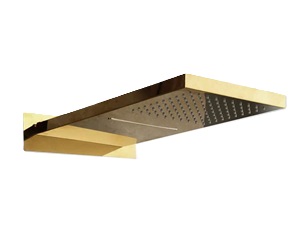
What Is a Rainfall Shower?
A rainfall shower is a shower system that uses a wide shower head to distribute water across a larger area in a rain-like spray pattern. Unlike a traditional angled shower head, a rainfall shower is commonly positioned overhead or near-overhead so water falls more vertically onto the user.
Rain Shower vs Regular Shower
↓ ↓ ↓ ↓ ↓
↓ ↓ ↓ ↓ ↓
↙ ↙ ↙
↙ ↙ ↙
| Factor | Rainfall Shower | Traditional Shower |
|---|---|---|
| Spray Direction | Primarily downward | Usually angled toward user |
| Coverage | Broad body coverage | More concentrated spray area |
| Typical Head Size | Often 8–16+ inches | Often 4–8 inches |
| Mounting | Ceiling or extended wall arm | Usually wall mounted |
| Spray Feel | Distributed over larger area | More concentrated at the body |
| Installation | May require overhead plumbing or longer shower arm | Usually simpler retrofit |
Do Rainfall Shower Heads Have Less Pressure?
A rainfall shower head can feel less forceful without necessarily operating at lower supply pressure. A larger face distributes water across more outlets and a wider area, producing a softer sensation than a smaller shower head concentrating a similar flow into a narrower spray pattern.
Pressure is not the same as flow rate. Building water pressure is commonly measured in psi, while shower-head water consumption is measured in gallons per minute (GPM).
How Many GPM Does a Rain Shower Use?
Flow rate depends on the specific shower head and applicable plumbing requirements. In the United States, shower heads are federally limited to a maximum flow rate of 2.5 GPM at 80 psi. Water-saving models may operate at lower rated flow rates.
A physically larger rain head does not automatically mean greater water consumption. A 12-inch or 16-inch head can still use a flow restrictor to control total GPM; however, distributing that flow across a larger face can change the perceived spray intensity.
What Size Rainfall Shower Head Is Best?
| Head Diameter | Coverage | Planning Consideration |
|---|---|---|
| 8–10 in. | Moderate | Useful where shower space or available flow is limited. |
| 12 in. | Broad | Common balance between coverage and installation size. |
| 16 in.+ | Very broad | Check shower dimensions, supply capacity and mounting support. |
How High Should a Rain Shower Head Be?
Rain shower mounting height should provide comfortable head clearance while keeping the spray pattern within the intended shower area. Many installations position the shower head roughly 80–84 inches above the finished shower floor, but user height, ceiling height, shower-head diameter and spray geometry should determine the final position.
Mounting excessively high can allow the spray pattern to spread farther and may change how the water feels before reaching the user. Very low mounting can reduce clearance and undermine the overhead rainfall effect.
Ceiling vs Wall-Mounted Rain Shower
Ceiling Mount
Positions the shower head directly overhead and provides the most vertical spray orientation. It can create a clean appearance but may require ceiling plumbing, adequate structural support and greater installation access.
Wall Mount
Uses an extended or angled shower arm to position the rain head away from the wall. Installation may be easier when replacing an existing wall-mounted shower head, although projection and mounting height must be coordinated.
Rainfall Shower Pros and Cons
Advantages
- Wider water coverage
- Overhead spray orientation
- Available in large-format designs
- Can be ceiling or wall mounted
- Works well in larger shower enclosures
Limitations
- Spray may feel less concentrated
- Large heads require adequate space
- Ceiling models can require additional plumbing
- Large spray areas require good drainage
- Not ideal for users wanting a strong directional spray
Is a Rainfall Shower Better Than a Regular Shower?
Neither design is universally better. Choose a rainfall shower when broad overhead coverage is the priority. Choose a traditional shower head when you prefer a more concentrated, directional spray or want a simpler retrofit. Combination systems can provide both by pairing an overhead rain head with a conventional or handheld shower.
“`
Choosing the right shower head often depends on personal preference and bathroom design. Rainfall shower heads and traditional wall mounted shower heads provide very different experiences.
Rainfall Shower Heads
Rainfall shower heads distribute water evenly over a larger surface area, creating a relaxing and gentle flow that simulates natural rainfall.
Traditional Shower Heads
Traditional shower heads focus water into a narrower spray pattern, often providing stronger pressure and more direct water coverage.
Top Shower Head Brands
Leading brands such as Kohler, Grohe, Hansgrohe, FontanaShowers, and BathSelect manufacture both rainfall and traditional shower head designs.
Browse a variety of rainfall and modern shower heads here:
Rainfall vs Traditional Shower Heads: Factors Worth Evaluating
Choosing between rainfall and traditional shower heads involves more than appearance. Homeowners
should avoid selecting oversized shower heads without adequate water pressure, ignoring ceiling-height
limitations, overlooking maintenance requirements, purchasing models with difficult-to-clean spray
nozzles, choosing incompatible plumbing configurations, underestimating water-heating demand, and
prioritizing aesthetics over spray coverage, comfort, and long-term reliability. The resources below
provide additional guidance on water performance, residential design, efficiency, and bathroom planning.
EPA WaterSense Program
Learn how efficient shower fixtures can reduce water use while
maintaining performance and supporting sustainable home upgrades.
Houzz Bathroom Ideas
Browse bathroom layouts, shower configurations,
renovation inspiration, and residential design trends.
Building America Solution Center
Discover best practices related to water systems,
efficiency improvements, durability, and residential performance.
Architectural Digest Bathrooms
Explore premium bathroom concepts, spa-inspired spaces,
and evolving trends influencing modern shower design.
“`html
Rainfall vs Traditional Shower Head Reference Library
Authoritative shower engineering organizations, plumbing standards, water-efficiency programs, bathroom design authorities, and architectural specification resources used to compare rainfall shower heads and traditional shower heads based on spray coverage, water pressure, installation requirements, user comfort, maintenance, efficiency, and overall shower experience.
Source Links
Rainfall Shower Heads vs Traditional Shower Headswikihomeimprovements.com
BathSelect Rainfall Shower Headsbathselect.com
EPA WaterSense Showerheadsepa.gov
American Society of Plumbing Engineersaspe.org
ASSE Shower & Valve Standardsasse-plumbing.org
IAPMO Plumbing Codes & Certificationsiapmo.org
NSF Plumbing Product Certificationnsf.org
ASME Plumbing Engineering Standardsasme.org
Luxury Hospitality Bathroom Designhospitalitydesign.com
Architectural Bathroom Projectsarchdaily.com
“`