
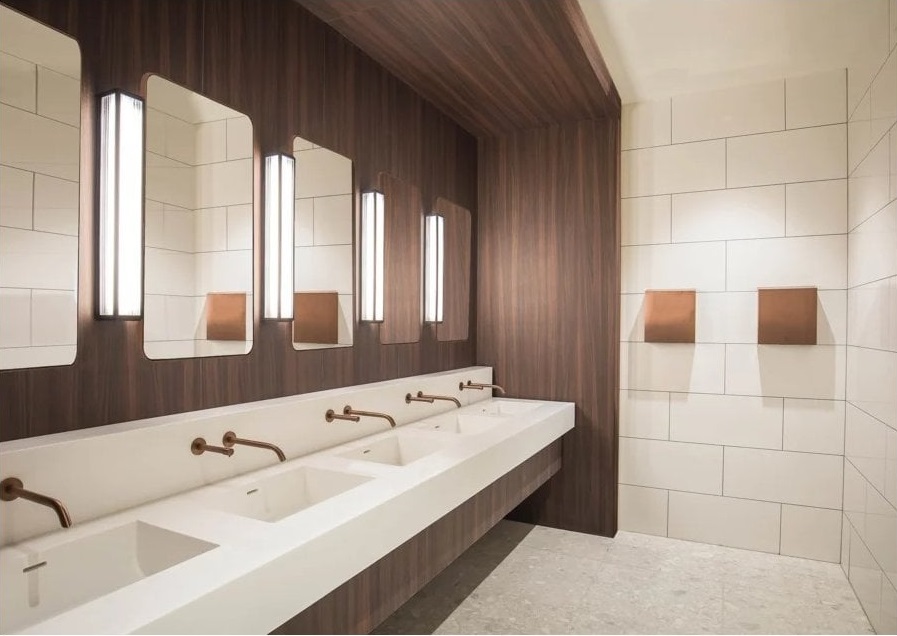
Evaluating Water Efficiency in Automatic Sensor Faucets
Automatic sensor faucets are frequently examined in commercial and public restroom design to determine whether they actually reduce water consumption compared with traditional manual fixtures. Engineers and facility managers often analyze operational conditions such as water flow continuing longer than necessary when manual faucets are left running, inconsistent shutoff timing caused by user behavior, pressure fluctuations within building plumbing networks, aerator clogging from mineral-heavy municipal water supplies, and splash-out that can occur when faucets are improperly adjusted for sink geometry. These real-world factors influence how water is used during everyday handwashing cycles in busy environments such as airports, hospitals, office buildings, and schools. Automatic faucets are designed with calibrated sensor detection zones and timed flow controls that allow water to run only when hands are present beneath the spout, helping limit unnecessary water usage while maintaining consistent operation. Because of these controlled activation cycles and regulated flow rates, sensor-operated faucets are commonly included in modern restroom specifications aimed at improving hygiene while supporting water conservation strategies in commercial buildings.
Commitment to Sustainability?
The global smart bathroom market is increasingly driven by a commitment to sustainability, reflecting broader environmental trends and consumer demands for eco-friendly solutions. This commitment is evident across various aspects of the market, from product design to operational efficiencies and corporate strategies.
Automatic water faucets, also known as sensor-operated faucets, are designed with the intent to conserve water by only operating when needed. However, their actual effectiveness in saving water can be influenced by several factors, including the type of usage, the environment, and the specific technology used in the faucets. Water is a precious resource and this is becoming more apparent as the world recognizes the effects of climate change; this is also becoming more apparent economically as the cost of water has risen and will most likely continue to rise in the future.
Studies and Findings
- Operational Performance in Public Buildings
- Abdallah, El_Rayes, and Liu (2013) in their study on sustainable measures in public buildings noted that automatic faucets can improve water efficiency by reducing the duration and frequency of water flow compared to manual faucets. They found that these faucets contribute to operational performance improvements in public settings (Sutainability).
- Field Test Insights
- Dougherty, Fanney, and Richardson (2002) conducted field tests that support the notion that automatic faucets can lead to water savings. Their research, although primarily focused on photovoltaic water heaters, includes data that reflects the water efficiency improvements associated with sensor-operated fixtures (Architects).
- Veritec Consulting Inc. Report
- Gauley and Koeller (2010) provided a comprehensive analysis in their report for Veritec Consulting Inc., revealing that sensor-operated plumbing fixtures do, in fact, save water under certain conditions. Their findings highlighted that automatic faucets reduce water usage by controlling the flow more precisely, particularly in high-traffic areas like public restrooms (Houzz).
- Millennium Dome Experiment
- Hills, Birks, and McKenzie (2001) evaluated the water efficiency and user perception of automatic faucets in the Millennium Dome “Watercycle” experiment. The study concluded that these fixtures contributed to significant water savings, largely due to their ability to minimize wastage during handwashing sessions by shutting off when not in use (Houzz).
- Public Perception and Behavioral Factors
- The Sacramento Bee article by Weiser (2014) discussed the water-saving potential of automatic-flush toilets and by extension, automatic faucets. The report highlighted mixed results, indicating that while these devices can save water, their efficiency greatly depends on user behavior and maintenance (Houzz).
Conclusion
The consensus across various studies and reports is that automatic water faucets can indeed save water, particularly in environments with high usage. The key factors that influence their effectiveness include:
- Usage Environment: Public restrooms and high-traffic areas benefit the most due to frequent and varied usage.
- Technology and Maintenance: The quality of sensors and regular maintenance play crucial roles in ensuring optimal performance.
- User Behavior: Proper usage by individuals is essential. Misuse or tampering can reduce the water-saving benefits.
Overall, when properly implemented and maintained, automatic water faucets offer a valuable solution for reducing water consumption and enhancing hygiene in various settings.